Deconstructing “Wokeness” and its Significance – A Semiotic Analysis of H&M’s 2015 Advertisement
Being ‘woke’ is cool. There is specific value invested in subscribing to certain aesthetics and ideologies that constitute the ever-changing, all-important state of “wokeness.” I seek to explore how this strand of political correctness has been elevated to omniscient dimensions wherein it defines social media influence, manifests as cultural cachet and, the idea that will be investigated through an H&M video advertisement; corporations tailor marketing policies around it (Whiteout, 2015, Ang, 2019).
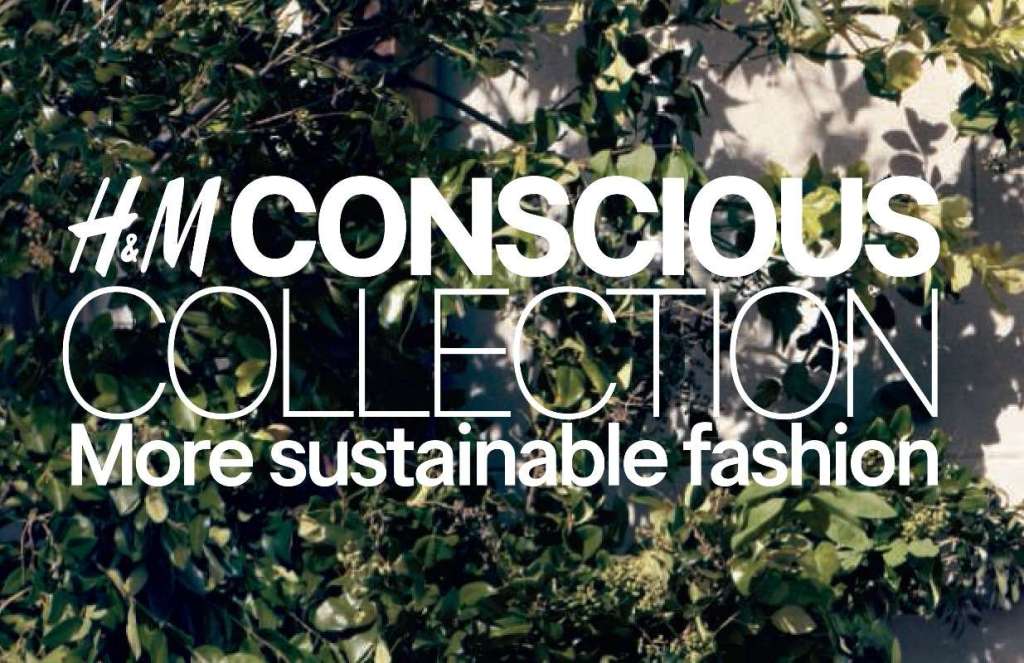
This paper is interested by how a video advertisement and its images can denote a seemingly objective statement, but the connotation of the same is loaded with political, cultural, and economic claims about what has currency and is persuasive to a consumer (Wong, 2018). The advertisement engages with a society obsessed with the performative nature of activism that “wokeness” lends it, an assertion that I will substantiate through the semiotic analysis of the H&M advertisement, “H&M Conscious: Sustainable fashion through recycled clothes.”
The advertisement was published in 2015 and has garnered 10,185,772 views[1]. The advertisement subverts stereotypical conventions in fashion, encouraging its customers to break socially imposed boundaries while advocating for recycling of one’s clothes to be the only “rule” of fashion. This analysis will be structured as first explaining the source of emission, then the message itself, followed by the modality of advertisements and the internet as infrastructure, and concluding with a note on the reception of this advertisement (Barthes, 1961).
Source of Emission
Little has been said in formal literature about what exactly comprises the über-zeitgeist phenomenon of “wokeness,” presumably because it can redefine itself overnight. One viral tweet can wage wars and start revolutions within this community (Milano, 2017). Nevertheless, there are clear goals, or rather characteristics of the phenomenon; it is liberal, progressive and feministic, it capitalises on social movements that are working against systems of inequality and the climate crisis. It is, at once, a call to action and a consolation for the lack thereof. With younger generations dissatisfied with the state of injustice[2], capitalism has modified itself to not just evade scrutiny for its own exploitative practices that cause this oppression in the first instance, but to pander to today’s “idealism” and this need for corporations to be woke (Jones, 2019). This has been termed “woke-washing” (Butler, 2011), or otherwise described as “appropriating social activism as a form of advertising” (Mahdawi, 2018). Prosaically put, advertisements from big corporations are commodifying caring about the world. There is profit to be made by being perceived as a progressive company because this “wokeness” is not just a political or social ideology espoused by angsty teenagers – it is manifesting into a society’s choices as consumers of the internet and a capitalist economy. The construction of this all-encompassing term “woke” becomes crucially important.
The Message
To uncover the construction of “wokeness,” I will examine the visuals and audio of the advertisement to prove that the company intended to compile random, archaic, and tokenistic images to seem, and allow its customers to seem, “woke.”

Fig. 1.
The first still denotes an African-American man in medical scrubs, walking on a street, with earphones in his ears. The connotations I have identified here are gender and clothing, gender and occupation, and race and occupation. The viewers are told that men can wear whatever coloured clothing they desire – a rather low-impact, dated and contrived attempt at promoting the feminist agenda. These garments are not arbitrarily pink, but the uniform of nurses that work with infants in a hospital. This targets the stereotype that men can neither be nurses nor like babies, a trope aggravated for African-American men, commonly portrayed as “criminals and dangerous” (Oliver, 2003).
The second still (Fig. 2) shows a group of children who are being told to “take a stand.” The affected and medicalised depiction of diversity is seen through the multiracial sample whose t-shirts adorn buzzwords of humanism and recycling all of which allude to an ambiguous, noncommittal idea of activism which is the precipitation of the video’s message; be socially aware, politically engaged and morally righteous. The whiteness of their t-shirts, seriousness of gaze, and manufactured protestations are all engineered to convey import and perhaps even a sense of superiority.

Fig. 2.
Other topics the video addresses include allowing a woman to “dress like a man” with the visuals of a woman dressed in professional attire which connotes a support of women in the workforce and nonconformity to gender roles.
Some other connotations are less direct, such as Fig. 3, where it is confusing what, exactly, is being addressed. On the basis of the “rule” itself, it could be the tackling of ageism and supporting people to show how much ever ‘skin’ they desire, yet there is a sexual overtone for there are three people on a bed, suggestively positioned, which begs the questionable interpretation of a threesome. This distillation is difficult, but could be construed as an argument for sexual liberation. These disconnected images lack substantive unity or linkage with a meaningful, specific social movement. Instead, they are a jigsaw puzzle of du jour activist jargon which, without the steady development of a case, is supposed to communicate the idea of “wokeness,” and this, it does.

Fig. 3.
The narrator’s diction of authority and morality is deep, paternalistic, and seductive, a combination of elements I term “The Morgan Freeman Effect[3]”. The audio seems god-like, and the image created of the speaker is that of a dominant, strong man. Studies have even shown that people associate greater physical appeal, “integrity, competence and physical power” (Oaklander, 2016) with a lower register. The combination of these stills that inspire, empower and emancipate with the moralising and implicitly righteous narration lead consumers to trust the advertisement. It must be moral, the indicators are all there. It must value the right things, it is feminist, environmentally-conscious and liberal. By extension, then, it must be woke.
Modality
This advertisement was not concocted in a vacuum. The connotations were selected bearing in mind a greater framework of advertisements, and an ‘economy of wokeness’ that is realised through the mechanics of the internet. In 1929, when Edward Bernays opportunistically positioned smoking as the epitome of the post-war emancipated woman, he birthed a public relations tactic that would endure for generations (Gunderman, 2019).
Almost as many as two-thirds of consumers in one study said they wanted brands to take a social and political stance (Oster, 2018). In one of the most spectacular failures of this style of advertising, Pepsi’s Superbowl advertisement that saw Kendall Jenner effortlessly dissipate a Black Lives Matter protest by offering a police officer a bottle of Pepsi, in the words of Sam Whiteout, “diluted wokeness into a meaningless vehicle and trotted out a celebrity who has done nothing of substance in that space.” Sentiment towards Pepsi plummeted following the advertisement’s release. Conversely, when Nike, on the conviction of counterculture star Colin Kaepernick, recalled a style of shoe that bore the American flag in order to support the movement against police brutality and systemic racism by kneeling during the American national anthem, their stocks surged by 5% and garnered them a profit of 6 billion dollars (Gibson, 2018).
The difference between the reception of these two advertisements, and the positive reception of H&M’s, lies in the modality of the internet. In the court of online opinion, advertisements that are adjudicated as authentic are valorised in the economy of wokeness. The same internet that cancelled Pepsi for its hollow monetisation of a burningly important protest revered Nike for its ethical, progressive, anti-Trump, anti-establishment advertisement, presumably based on trustworthiness – Kaepernick was pioneering the fight against racism, Jenner was not, hence the former is trustworthy, while the latter is not. Herein lies the superficiality of wokeness online; it scrutinises the individual (Jenner, Kaepernick) while the ethics of Nike’s production processes (or lack thereof) and Pepsi’s treatment of its workers is fundamentally not a question the liberal left engages with. H&M’s contribution to the destruction of the environment is immaterial so long as they continue to purport these shallow schemes of recycling bins at their stores and the occasional advertisement reminding one to reuse their clothes.
H&M’s publicly awarded ‘authenticity’ might be what renders them ‘good’ in an economy of socio-political discourse, but there are still inconsistencies with regard to why certain advertisements, despite having problematic intent or origin may succeed, while similar others will be called out for it. The answer becomes a cynical one, and perhaps the truest one: that people do not genuinely care about action and intent, but bandwagon onto whatever brand is most convincing in seeming like they care, and in seeming like they are ‘good.’ By that metric, H&M’s video was a smashing success.
Reception
“Fake outrage, manufactured hysteria, culturally sanctioned radicalism, constantly caring about things as a narcissistic substitute for actually doing something about them,” is how Sam Kriss characterised the social climate of suffocating wokeness. Pessimistic consumers would view the advertisement as evidence that there is nothing legitimate, helpful and real to this idea of wokeness. Nonetheless, by deconstructing “wokeness” and critically examining what it comprises, this paper invites the possibility of redirecting this capacity for activism to clear, purposive goals and dismantling the structures which make advertisements like this possible rather than this highly capitalised and unfair exoneration of suppliers (H&M) simultaneous with the critique and problemitisation of the individual who buys into their gimmicks. The economy of wokeness is entrenched with privileging one kind of social cachet over another, and it is this intrinsic working of the cyber left that must evolve. Greater sensitisation of people to the red herrings of advertising is significant, but mobilising people out of their insouciance to hold these corporations accountable is paramount. Definitions of wokeness might be subject to change, but collective empathy and the fair prioritisation of a gamut of social issues should persist.
Works Cited
Butler, Mary. “Clicktivism, Slacktivism, or ‗Real‘ Activism? Cultural Codes of American Activism in the Internet Era.” ProQuest, 2011.
Fisher, Mark. Capitalist Realism: Is There No Alternative? Zero Books, 2010.
Fisher, Mark. “Exiting the Vampire Castle.” OpenDemocracy, 24 Nov. 2013, http://www.opendemocracy.net/en/opendemocracyuk/exiting-vampire-castle/.
Gunderman, Richard. “The Manipulation of the American Mind: Edward Bernays and the Birth of Public Relations.” The Conversation, 5 Dec. 2019, theconversation.com/the-manipulation-of-the-american-mind-edward-bernays-and-the-birth-of-public-relations-44393.
H&M Conscious. “Sustainable Fashion through Recycled Clothes.” 2 Sept. 2015.
Oliver, Mary Beth. “African American Men as ‘Criminal and Dangerous’: Implications of Media Portrayals of Crime on the ‘Criminalization’ of African American Men.” Journal of African American Studies, vol. 7, no. 2, 2003, pp. 3–18. JSTOR, www.jstor.org/stable/41819017.
Howard, Emma. “How ‘Clicktivism’ Has Changed the Face of Political Campaigns | Emma Howard.” The Guardian, Guardian News and Media, 24 Sept. 2014, http://www.theguardian.com/society/2014/sep/24/clicktivism-changed-political-campaigns-38-degrees-change.
Jones, Owen. “Woke-Washing: How Brands Are Cashing in on the Culture Wars.” The Guardian, Guardian News and Media, 23 May 2019, http://www.theguardian.com/media/2019/may/23/woke-washing-brands-cashing-in-on-culture-wars-owen-jones.
Kriss, Sam. “In Defence of Lazy Kneejerk Contrarianism.” Idiot Joy Showland, 26 Apr. 2019, samkriss.com/2019/04/12/in-defence-of-lazy-kneejerk-contrarianism/.
Mahdawi, Arwa. “Woke-Washing Brands Cash in on Social Justice. It’s Lazy and Hypocritical | Arwa Mahdawi.” The Guardian, Guardian News and Media, 10 Aug. 2018, http://www.theguardian.com/commentisfree/2018/aug/10/fellow-kids-woke-washing-cynical-alignment-worthy-causes.
Mathew, Vinil, director. #StartWithTheBoys| Film by Vinil Mathew Starring Madhuri Dixit for #VogueEmpower | VOGUE India. YouTube, YouTube, 2014, http://www.youtube.com/watch?v=0Nj99epLFqg.
Oaklander, Mandy. “Morgan Freeman’s Voice, Waze & the Science of Why We Love It.” Time, Time, 23 Feb. 2016, time.com/4233926/morgan-freeman-voice-waze-science/.
Toppano, Elio. “Semiotic Annotation of Video Commercials.” The Fifth International Conference on Building and Exploring Web Based Environments, 2008, doi:10.1007/springerreference_66038.
Vigo, Julian. “How Does Advertising Affect Culture?” Forbes, Forbes Magazine, 5 Feb. 2019, http://www.forbes.com/sites/julianvigo/2019/02/05/how-does-advertising-affect-culture/#57da565b20f2.
Wong, Julia Carrie. “’It Might Work Too Well’: the Dark Art of Political Advertising Online.” The Guardian, Guardian News and Media, 19 Mar. 2018, http://www.theguardian.com/technology/2018/mar/19/facebook-political-ads-social-media-history-online-democracy.
DOster, Erik. “Majority of Consumers Want Brands to Take a Stand on Social and Political Issues, According to New Study.” Adweek, Adweek, 12 Jan. 2018, www.adweek.com/brand-marketing/majority-of-consumers-want-brands-to-take-a-stand-on-social-and-political-issues-according-to-new-study/.
Gibson, Kate. “Colin Kaepernick Is Nike’s $6 Billion Man.” CBS News, CBS Interactive, 25 Sept. 2018, http://www.cbsnews.com/news/colin-kaepernick-nike-6-billion-man/.
[1] At the time of this paper’s submission (data collected from YouTube).
[2] This injustice is broad and multifaceted. Germane issues (to this paper) include the marginalisation of women, of people of colour, of people that are not cisgender rich white men, and of the environment.
[3] Morgan Freeman’s position as being moral and trustworthy as an actor may be derived from the 2003 film, ‘Bruce Almighty’ where he actually played the role of god. In conjunction with this, he has done a considerable amount of voiceover work wherein he is lauded for his persuasiveness and prestige – two defining advantages in the world of media.
 sanjana sheth
Leave a comment