Vijaydan Detha’s Dohri Zindagi and Michael Foucault’s History of Sexuality, Vol. 1 on Agency in Sex Work
Contemporary debates about sex work are often heavily rooted in the cultures of their operation and are subject to the legislation and mechanics of that community. In other words, with respect to sexuality, superstructures, institutions and patterns of sanctioning determine what a society permits and disallows.
This paper is concerned with dissecting how the prevalent perspective on prostitution has come into being through the regulation of knowledge, social and financial capital. More specifically, it will explore how the intersections of class and caste define and limit one’s sexual agency. I will be analysing this claim with reference to the article, ‘Sex as trade and tradition,’ by Asit Jolly and the texts, Dohri Zindagi by Vijaydan Detha and The History of Sexuality, Volume 1 by Michael Foucault.
These are important considerations when we analyse sexuality because it is not the same for a forward caste, moneyed man and a backward caste, financially dependent woman. Not everyone has the same agency in society, and this colours their understanding of their sexuality. The article introduces sex work as a “family tradition,” which demonstrates the entrenchment of this labour within the familial, economic unit (Jolly, 2019). As a result of how tradition operates, there are three primary effects on human agency when occupation is domestically reinforced: first, complete knowledge, and consequently, the ability to make an informed decision with an understanding of all viable options is compromised. Second, when financial pressures or incentives of the collective group influence individual rationality, the utilitarian good trumps the personal good. Lastly, when birth into a family ascribes the identity of caste onto a person, their life chances and life style are unequivocally restricted through the mechanics of the caste system. These three variables (caste, class and knowledge) are by no means distinct from each other; knowledge asymmetry is a function of class and access to education, caste’s prescription of a profession impedes social and financial mobility, and a person’s agency, which is an individual’s capacity to impact their life trajectories and exercise power, becomes a navigation of these forces in the context of existent structures of the family and the particularities of this society. This paper will first tackle knowledge as a determinant of sexual agency, followed by financial and social capital as adjudicated by the caste system, and conclude with an assessment of sexual agency for specific groups being vastly different than that of other groups.
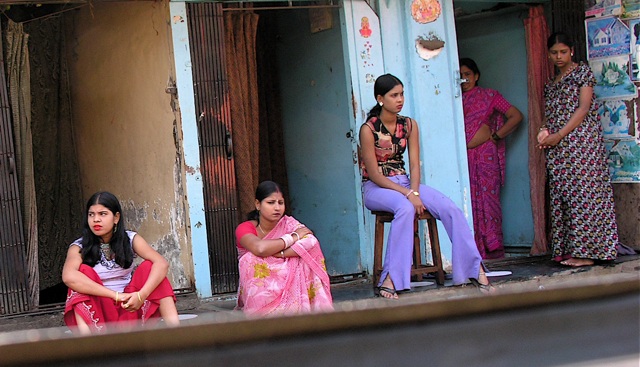
For the Bedia women, prostitution is “the only trade [they] know[s]” suggesting that what is oft construed, both in the article and in general discourse, as ‘consent’ is actually just a lack of knowledge – either about alternative sources of income, government welfare schemes or legal remedies provided by the state. Their knowledge of the trade, too, is primarily through unfiltered observations of their female relatives, which begs the analysis of how sex education, or the lack thereof, acts as a constraint in forming a well-rounded choice. Some sex education is certainly important, even if other ‘intuitive’ aspects come “naturally,” at least clarity regarding STDs and contraception should be ensured, for their trade and overall health is at risk with the present working conditions of Bedia women. In Dohri Zingadi, when Beeja is socialised as a boy, her ideas, behaviour and clothing is all ‘masculine’ because she was not told the truth, was not given essential knowledge about herself and her identity. Instances like this prove how little is really ‘natural’ and how much is a construct imposed by interpersonal relations, a proposition that firmly makes knowledge paramount in the appreciation of sexual agency.
Within the society of the article and inside the homes of these women, by socialising women in a climate of denying them information about other vocations or prospects, their decision-making and consent is predicated upon the false binary of marriage or sex work. Further, marriage is portrayed to them as ‘a lifetime of domestic drudgery,’ and something that ‘leads to ruin,’ because of the lack of purchasing power and independence married women enjoy, making sex work the only real, lucrative, fall-back plan.
These statements do not seek to negate the valid possibility that sex workers are free-thinking individuals who choose to monetise sex, instead, they seek to offer that the more probable rationale behind this career path, given the circumstances previously qualified, is not one of agency and subsequently is not an informed choice – perhaps if women were equipped with realistic models other than that of prostitution (if they grew up with exposure to different skills by their mother, sisters or aunts) and if they had a comprehensive grasp of substitutes, they might not have chosen this path for themselves.
As Foucault proposes, the power of knowledge is exercised through examining who is doing the saying, which controls what is known, which shapes patterns of thought and perceptions about a phenomenon (Foucault, 1976). It is my contention that the manufactured consent of these women is a product of the aforementioned characterisations of marriage and independence that are handed down by women outside the trade or by men who relish this system where they absolve themselves of responsibility by thrusting it onto the government and women whose benefits they comfortably reap.
Those with financial capital have a greater domination of this model of information asymmetry. Beeja’s father, a wealthy man, is unquestioned despite raising a girl as a boy because “the elite are different – their rocks float” (Detha 157). Moreover, with the advent of capitalism, sexuality became “a thing not to be simply condemned or tolerated, but managed, inserted into systems of utility, regulated for the greater good of all, made to function according to an optimum” (Foucault 24). The medicalised writing of the article evidences how prostitution is presented as uninvolved with seduction, desire and sexuality as described in the Repression Hypothesis, wherein we look at sexuality as linear, patriarchal and heteronormative.
This heteronormativity and capitalism can become mutually reinforcing; in Detha’s work, an exhibition of sexual agency in any disparate mode than that delineated by this nexus is “a slap in the face of manhood,” because of how the patriarchy operates – the patrilineal inheritance of wealth will get usurped, the conventional division of labour will get disrupted, and men will perhaps have to “start searching for mice holes” (Detha 158). This is also exhibited through the rape of Beeja’s sister for the production of an heir to protect the line of inheritance (Detha 171). These factors that control sexual agency gain significance for their restrictive capabilities, yet on a more rudimental level, money impacts one’s material reality and hence in ameliorated economic conditions, it is likely that these Bedia women would perceive their own sexual agency to be more than it is now.
They also explicitly state that the sex work they do now is a means to the end of breaking out of this vicious cycle of poverty. Sexual agency and financial security in a Foucauldian society are intertwined with requirements for marriage and questions of propriety – since these women value the freedom this work awards them, they make the trade-off of abdicating that life for this one, with the hope that there can be intergenerational mobility for their literate children. The specific infrastructure of class in this situation of astronomical inequity in a society thwarts the chance for vertical mobility in a lifespan, thereby restricting a person’s agency through the structural barriers that prevent women from applying for other jobs and upliftment from their income bracket.
It is universally observed that women from low-income groups are more susceptible to entering sex work than others, but this trend is exacerbated by the caste hierarchy in India. The caste system that dictates the occupations of groups of people allocates with it dignity of labour and respect for a career. The backward classes suffer in two prominent ways – economically and socially. Economically, the professions carried out by forward castes supply the highest income, and socially, these forward castes enjoy a monopoly on information and are associated with prestige and dignity. Backward castes, on the other hand, are relegated to the jobs nobody else wants, such as sex work.
The heavy connotations of “purity” that come with caste are manifested nowhere more clearly than in the dynamic between caste and sexuality; we learn in Dohri Zindagi that Beeja’s mother’s affairs are even more objectionable because they occurred with a backward caste man, and the news is littered with articles about honour killings that is, when a woman of a forward caste has sex with a lower caste man and is promptly murdered for bringing dishonour onto the family (Detha 144). It is the recurrent idea that sex, at times, can be ‘dirty.’ It is the backward caste Bedia women who must be the ‘dirty’ sex workers, who profit off of impure extramarital sex and the same Bedia women who are banished from schools and drinking wells of the rich and moral; they can do this, but nothing else.
The Repressive Hypothesis is so deeply fortified within the socioeconomic structure that any attempt at dismantling the intellectualisation of sexuality and its exile to the psychiatrics, the neurologists and the gynecologists would require a full-frontal attack on the institutions of politics and economics as well. Despite all this discourse about sexuality, sexual agency remains largely dependent on other institutions and vulnerable to the many inequalities of stratification.
The only reason Beeja and Teeja leave their home in feministic defiance and cool liberation is because they can. They enjoy the kind of information, social and financial capital that allows them to be revolutionaries and challenge the status quo while remaining sheltered from the usual consequences of their acts of sexual emancipation. The omnipotent spirits that protect them are nowhere to be found for these Bedia women. A safe home that cannot be infiltrated by pot-bellied men and poverty, insulated from the material realities of casteism and illiteracy is a utopian, distant, dead-end dream. In a world where people are deprived of personal agency, they stand no chance in overthrowing their oppressors, especially when today’s oppressors are robust institutions with centuries of political and social systems backing them and sneering men with cruel intentions.
Works Cited
Detha, Vijayan. Chouboli & Other Stories, Vol II. Translated by Christi A. Merrill, Fordham University Press, 2011.
Foucault, Michel. The History of Sexuality, Vol. I. Vintage Books, 1976.
 sanjana sheth
Leave a comment