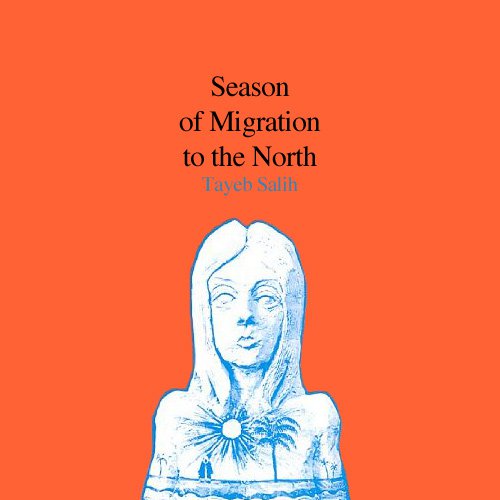
A near-inescapable reality of collective living is the many processes of power eternally engaged in a campaign to assert their ascendency over individuals’ modes of organisation. Yet the strategies of these power systems are nonlinear, weltering and complex. They extend beyond merely aggregating capital or possessing brutish strength. In this paper I ask, What does power need in order to impose itself as power? How do power’s technologies play out in two of its specific productions – colonialism and the patriarchy? To address these questions, I will look at the character Mustafa Sa’eed from Season of Migration to the North by Tayyeb Salih. Over the course of his lifetime, Mustafa’s navigation of his race and gender identities swings from thoughtful to violent to devastating and back. By accompanying him on his itinerant journey across continents and contexts, I hope to uncover the possible homology between the technologies of power, the psychological considerations of political oppression, and what it means to subvert power systems.
As a young boy, Mustafa Sa’eed is denigrated as (or is lauded as; the perspective oscillates) a “black Englishman” by his peers for his mastery over Western languages and methods of knowledge (Salih 38). Salih writes that the “sole weapon” (22) that was his mind, was “a keen knife,” (27) “biting and cutting like the teeth of a plough,” (19) which had methodically perfected the coloniser’s language. However, the entire colonial project has been framed as an exercise in civilising a population out of their incurable blackness; it hinges on the essential inferiority of the Black Other. To this end, colonial schools effectively deracinated African people from their culture. In its stead, colonial institutions meticulously taught and pedestalised white ontologies. Mustafa bitterly remarks, “schools were started so as to teach us how to say ‘Yes’ in their language…” (Salih 95). He had skilfully learnt the whiteness that was presented as superior and sophisticated, but also irreconcilably distinct from the primitive knowledge systems of Africa. The black student was therefore raised to accept colonial rule as justified, even moral, and to acknowledge their own essential, inexorable inferiority. Yet Mustafa’s childhood nickname summons the question: by so artfully appropriating white forms of knowledge and sensibilities, is Mustafa a success story for the colonial mission or an anomalous threat to its functioning that should never have been possible? He appears to be a success inasmuch as he has represents the black savage educated by the blinding light of Western, post-enlightenment knowledge. This education sediments him in a rationality that undermines his own culture and perpetuates his oppression. But in his unnerving proximity to whiteness through his genius, he mutates himself into the threat that should never have been possible.
Mustafa straddles a dangerous paradox of displaying two racial identities that are considered inherently discrete and incompatible with each other. This lays bare a fundamental contradiction in the colonial project. If white supremacy, virtue and intelligence was a biologically predetermined and immutable truth, how could the colonial state claim to be diffusing it to the irredeemable black savages? And, equally important, how did such a diffusion succeed? If ascriptive race identities and qualities are to be trusted, the racial limbo of this “black Englishman” should have been impossible. It is precisely the race binaries which Mustafa’s existence casts doubt that form the basic grammar of colonial power.
When Mustafa later travels to London, his impressive intellect as an English academic is permitted and forgiven by the stiff, white gatekeepers of knowledge ecosystems only since he confirms his exotic alterity in every other way. He talks in the language of stereotypical, reductive blackness that was expected of him. He never allows himself to be seen as wholly Anglicised. Colonial power sustains itself through the binary of black/white. European military, economics, religion, science and art all necessarily had to be discrete from and better than Black culture. Otherwise, there was no logic to colonialism either for the Europeans themselves (who liked to think of themselves as morally and rationally righteous) or for their colonial subjects. Further, this superiority had to come from an ahistorical, unchanging essentialism so that the hierarchy of the binary was sacralised and unimpeachable. But the ‘innate’ ascendency of the West was far from unchanging, unimpeachable or ‘essential’ in any way. Thus was created the myth of race. It had to be fabricated and sold to its subjects as seamless. It had to be a fixed, biological identity. The production of colonial power requires the technology of the myth to create racialised identities that are normatively ranked and naturalised. The white man’s burden. Exterminate the brutes. European rationalism – Power stitches stories together and wraps them around individuals as if the garbs were skin.
Mustafa’s racial dualism brings to the surface the cracks in the myth of biological racial identity. So, if race is not a biological trait, then what is it? In the seminal Performative Acts and Gender Constitution, Judith Butler confronts such ruptures and insecurities of identity in her theory of gender performativity. She proposes that the learnt gender identity is always an “internally discontinuous” project of power (Butler 901). As social constructivism argues, the fabrication of gender is a continuous process whose skeins are often contradictory and inchoate. It is my contention that through Mustafa, race is exposed as an elaborate and ultimately faltering performance. The construction of the identity of race is a strategy for colonial power “which has survival as its end” (Butler 903). Race can then be seen as a mutable, purposive abstraction, situated in the repeated, stylised patterns of flesh and bones, in interpersonal communications, in sex and in language, and not in pseudoscientific fealties to bloodlines, genetics and hereditary traits.
At this juncture, it is still unclear what it means for race to be performed. I will turn to sketching out Mustafa’s performance of race in order to appreciate how it plays out as a strategy of colonial power, the costs of the mythologising of race, and how such a project of power can be subverted.
Growing up in postcolonial Sudan, Mustafa’s first-hand experience of the British colonial state and its bloodied machinations was limited and peripheral at best. Nonetheless, its traumatic afterimages linger in what Jung, as quoted in Frantz Fanon, calls the “collective unconscious” (463).The collective unconscious is a persistent anger whittled from historical persecution that searches for “an outlet through which the forces accumulated in the form of aggression can be released”(Fanon 463-4). Fanon’s theory offers children’s cartoons as an outlet for the discharge of aggression. In ‘The Negro and Psychopathology,’ he shows that like all young boys, young black boys such as Mustafa default to bellicose identification “with the explorer, the bringer of civilisation, the white man who carries truth to savages” (Fanon 466).
I submit that Mustafa’s identification with the white explorer is at once what enables his performance of whiteness, and is also a consequence of his performance of whiteness. Instead of cartoons, Mustafa weaponises Western intellect. His performative prowess lies in his ability to absorb the “all-white truths” taught in African institutions and enact them with his body (Fanon 465). Fanon attributes the automatic identification of the young black boy with the white oppressor to be a symptom of neurosis. He posits that there is a neurotic desire to be the heroic vanquisher that is borne out of the unconscious trauma of racial otherisation. I argue that in addition to the latent trauma lurking in the unconscious, postcolonial Africa very explicitly privileged white traits and truths in institutions and in the imagination of the masses. White truth symbolised power, masculinity and victory. The twin processes of identifying with and attempting to perform whiteness “induce the body to become a cultural sign” (Butler 902). For the postcolonial black identity, the racialised sign signifies self-effacement and indoctrinated inferiority. The body is incited to perform whiteness as best as it can, and the body commits to the performance through identification. This performance of the Western affect is not the accomplishment of the Western affect. It is a performance of aspiration, of natural deference, of an essential lack. “The authors of gender [here race] become entranced by their own fictions whereby the construction compels one’s belief in its necessity and naturalness” (Butler 903). It is not that “there is no black voice” as Fanon insisted, rather that the black voice has been rigged by technologies of power to long for whiteness (Fanon 467).
Inside the borders of the African postcolonial state, performances of race are mediated by the experience of colonisation which strove to ‘civilise’ and ‘reform’ Blackness. The myth of the black race itself is peddled by racist regimes as essentially weak and oppressed. Like Fanon’s automatic identification with the white explorer, racial performance is not a choice. Instead, “the body is a historical situation…dramatizing, and reproducing a historical situation” (Butler original emphasis, 902). Subjects are always already being interpellated by strategies of power and discursively produced through the myths they compose.
A salient consequence of conceiving of race as performed and not innate is that it can change. Its performance can be changed by evolution, internal discontinuity, or subversion. As characterised earlier, after moving to London, Mustafa is faced with the reality that despite his identification with the white and his manufactured performance of whiteness, he is not white. First-hand contact with the white community compels the black subject to realise his neurosis, his being “a phobogenic object, a stimulus to anxiety” (Fanon 466). Migrating to the North and living amongst Europeans compels the black subject to modify their performance of race – a myth that always works to serve colonial systems of power. In the colonial or postcolonial state, the myth of race carefully produces racial inferiority and a desperation to reach the civilisation of whiteness in its subjects. This, as detailed previously, ensures that the façade of a ‘civilising’ project was kept up, and so that the logic of colonialism remained intact. The demands of London were different. The internally contradictory myth of race rears its ugly head. Because here, Mustafa has to reproduce an exaggerated and fetishised blackness whenever called upon to do so. He was veering far too close to whiteness, he had to remain the exotic Other.
Mustafa began to see the failings of the race myth. He slowly realises that the pipe-dream of complete assimilation in Europe is impossible. The Fanonian anxieties of his inferiority cripple and anger him. Although London requires him to perform Blackness in the hyperbolic Orientalist affect, he is not a host body “passively scripted with cultural codes” (Butler 906). Being able to recognise the enduring traumatism of colonialism is sobering, and Mustafa resents his oppressors. He was once described as “one of their [the colonialists] most faithful supporters” (Salih 31). In the company of the English, Mustafa “was a show-piece exhibited by members of the aristocracy who…were affecting liberalism” (Salih 32).
By painstakingly replicating and aggrandising his racialised myth, Mustafa wages sexual warfare against his colonial history. I believe that his postcolonial rage is directed at the strategies of colonial power which freeze him into a predetermined position in the racial binary. This dichotomous conception of race prevents him from being both an intellectual and an understated African. However, his ‘subversive’ rebellion against the technologies of colonial power that binarise and straightjacket is actually a re-iteration of these same typologies of power, except Mustafa invokes the specific typologies of the patriarchy instead of colonialism.
He reverses the racial roles of colonisation to place the white women he seduces as the epistemic targets of his sexual colonisation. He admits, “I, over and above everything else, am a colonizer” (94) but simultaneously maintains that, “I’ll liberate Africa with my penis” (120). On one plane, he is the male invader. On the other, he is the oppressed avenger. Mustafa seeks to rehabilitate his phobogenic neurosis by brutalising white women. He pursues white women who typify ‘femininity’ like young virgins or committed mothers presumably because he sees greater satisfaction and vengeance in slaughtering the women most endeared to the patriarchy. His choice of victims reeks of the same reductive essentialism that he is militating against.
It is by utterly entrancing white women with his illusion of an all-consuming blackness that Mustafa destroys them and emerges victor. He entices them with his eroticised, hypersexual African-ness which speaks furtively about the Nile, its smouldering sun and hypnotic incense. Isabella Seymour says to him, “Ravish me, you African demon. Burn me in the fire of your temple, you black god” (Salih 50). Mustafa more than agrees, vigorously performing in his “den of lethal lies” – curated precisely with Egyptian manuscripts, polaroids of naked tribeswomen, and lush ‘Oriental’ carpets destined to sell that race myth which his conquests expect – he tells her that he is “like Othello – Arab, African…my head is African and teems with a mischievous childishness” (Salih 38).
Their total submission to him by becoming his slaves, his deflowered subjects, his spoils of war, marks their fall into primitive mindlessness and savagery that is resoundingly un-White. His victory is cathartic and retributive. The women are stripped of their superior skin while he refuses to abdicate his English intellect or civilized economic genius for them. His first object of desire, Mrs Robinson, asks him charmingly, “Can’t you ever forget your intellect?” (Salih 20). No, is Mustafa’s answer, as he attempts to collapse the boundaries of black/white which demand savagery of him so that he does not reach whiteness, I cannot. The “internal discontinuity” of race is naked and undeniable to the women he reels in with his mythological Blackness and then cuts off with his cunning.
But simply because race is performed, it does follow that resisting its myths are easy, straightforward or come at no cost. The repeated racialised acts Mustafa participates in are constructive and instructive.Bodies have muscle memory. Mustafa’s ‘manipulation’ of the performance of race does not liberate him from being yoked to its pathologies and neuroses; they very much seep in and emanate out from his psychophysiological frame of being. Performance blurs the lines between intention and action. Mustafa’s recurrent scenes as the hypermasculine primitive predispose those patterns of behaviour like reflexes and rote memorisation. The psychic stakes of subversion or any performance, really, are captured in Mustafa’s the night of “truth and tragedy” with his British wife, Jean Morris (Salih 73). In this shattering encounter, Jean Morris baldly confronts the falsity of the mythical hypermasculine black man Mustafa play acts with her. She demands that he commit earnestly to the role he has been baiting her with through his performance. She demands that he follow through on the symbolic myth he has taken on – that of being an uncontrollable, unintellectual African savage who would succumb to the eroticism of sexual murder. When Mustafa does murder Jean Morris, we see how the fictions of identity can feel as real as anything can. We see how easy it is for strategies of power to reinforce their binaries and their myths.
In the name of toppling race regimes and reparations, European women become disappearing, ignorant mirages and brutalised chess pieces in Mustafa’s crusade against colonialism. Which is to say that white women are human enough to be the targets of a proxy war against racial essentialism. Yet women everywhere (glaringly, African women) are denied liberation from a structurally analogous prison – the patriarchy. The patriarchy and a racist colonial establishment are both systems of power that attempt to pigeonhole people into identities. An initial introduction to protagonist Mustafa Sa’eed sketches him as imposing and impenetrable, until, “he smiled gently at me and I [the unnamed narrator] noticed how the weakness in his face prevailed over the strength and how his eyes really contained a feminine beauty” (Salih 12). The hybridity of Mustafa’s commanding masculinity set beside a kind of feminine fragility cuts through the text as an unresolved and fascinating tension which continuously informs his identity and fate. In many ways, this ‘conflicted’ description of Sa’eed reflects the psychological impact of colonisation on the sturdy patriarchal praxis of premodern Africa.
Colonisation landed a debilitating blow to what was previously understood as an infallible truth of precolonial Africa: the supremacy of the male-figure. Of course, hierarchies within the category of men did exist and stratify social living prior to colonisation. However, the finer differences within the designation of ‘man’ did not restrict life choices and expression to the defining extent that the all-consuming patriarchy did. The patriarchal order firmly cast women as congenitally inferior to men, and hence beholden to husbands and fathers. Under this sociological schematic, masculinity stood for dominance, strength and power, while femininity meant weakness, dependence, and victimhood. But the colonial state had proven its domination over African women and men. For the first time, the reigning patriarchal authority was punctured by the gloriously invincible white man. Although African men continued to oppress African women, African men were no longer the last word or the category that wielded the most power. Suddenly, they were answerable to an external source of authority. Furthermore, the patriarchy had inscribed the identity of man with power and victory, and woman with oppression and defeat. Masculine power was not a relative position of authority; it was built as the final, absolute sovereignty. To use the lexicon of the patriarch, by militarily and culturally conquering African men, white Europe had feminised them.
When the colonised patriarchy was impelled to grapple with its racial inferiority, the rivets of the supreme male machine sputtered into malfunction. Power changed hands from the black man to the white. The intervention of a new process of power (race) sent the whole system of the patriarchy into a flurry. How could the colonised man be the irreproachable master if he was also the defeated slave? Under the patriarchy, the schizophrenia of being both is untenable. Under patriarchy, there is no room for this ambivalence, there is no apparatus for intersectionality. Why? Because the patriarchy imposes itself by promising and enforcing a biologically deterministic binary of man/woman. This binary assigns strength/weakness or power/powerlessness through its gender myth. In some regards, the strategies of gender and race do not map perfectly onto each other. While women are never encouraged to act like men, under racist rule, Africans are encouraged to inculcate European sensibilities, but are also forced to identify as black. But as seen in this novel, the strategies of colonial power and patriarchal power have the similar scaffoldings and sciences.
Much anti-colonial resistance and theory slink right into patriarchal strategies of power. For instance, I believe that Fanon’s conceptualisation of the “sacrificial dedication permeated with sadism” (466) used to describe the young black child’s automatic identification with the white colonialist exposes the triumph of the patriarchal ideology in naturalising the invisibility of women and their precolonial, colonial and postcolonial trauma. Fanon’s Negro subject, combative and cheated, is inalienably male. The black woman is nowhere to be seen, for she cannot identify with the white hero, having never known such immediate ascendancy.
Subverting the empire of identity demands a radical reconfiguration of all hierarchies. I believe this is a conclusion that perhaps Mustafa himself arrives at after the hypocrisy of his subversion crushes him. After years of devastating women in the name of anti-colonialism, the murder of Jean Morris brings Mustafa to a small village where he marries a local woman, Hosna. After Mustafa dies, Hosna showcases tremendous strength and revolts against the patriarchy by choosing to murder her unwelcome suitor and then die by suicide rather than submit. When they were married, Mustafa treated Hosna with startling respect and kindness. Not only is this a dramatic transformation from the way we see him treat women leading up to this point, but also it is a respect and kindness few men awarded their wives. Further, we can read Hosna and Mustafa’s (possible) self-immolation as a final rejection of the untenable charade of race and gender. Hosna did not fit into her position as carved out by the patriarchy, and Mustafa did not dovetail with the demands of the colonial. Like all acts in this world, this was not subversion in a vacuum for the sake of symbolism, or noble martyrdom in pursuit of a universal liberation from identity (Pertinently, Hosna’s her death will be covered up like a crime and buried into oblivion, lest anyone discuss the problematic ideology of patriarchal systems). These acts came from anxiety, fatigue, neurosis, loss of control, and rage. But that is precisely the point.
What we see through Mustafa is that in order to subvert power, you cannot use its own strategies. If the modus operandi of colonialism is in robbing individuals of their rights to self-determination, expression and self-esteem, scathing subversion can never come from playing the same game but reversing the roles – by acting as the patriarch or the white coloniser. As the dynamics of power flow like electric currents, first privileging the white woman over the black man, then the black man over the white woman, then the black man over the black woman and so on, it is easiest for power to be routed to enclosed, systematised bulbs. Salih has shown us the incendiary Jean Morris, the dynamic Mustafa, and the victorious Hosna dart between power positions and identities. With a resistance armed with a political morality, shedding the skin etched with totalising myths, a powerless social reality can be inaugurated.
What does power need to impose itself as power? It needs identity. It needs order. It needs anchors. This essay has traced the discursive productions of patriarchy and colonialism to draw attention to a homology and a tentative transferability of the machineries of power. This tells us something: power structures bear intractable affinity for the binary, essential, and Other. Subversion can come by piercing the performance power prescribes. Subversion can come from inching away from the vocabulary of hierarchy. It is because power divides, splinters, fragments and other-ises individuals through identity that there is scope for and solace in its subversion. Not by re-arranging the rungs on the ladder, but by dismantling the rungs altogether.
Works Cited
Butler, J., 1988. Performative Acts and Gender Constitution: An Essay in Phenomenology and Feminist Theory. Theatre Journal, 40(4), p.519.
Fanon, Frantz. Black Skin, White Masks. Ch. 6, London: Pluto, 2008. Print.
Salih, Tayeb. Season of Migration to the North. Translated by Denys Johnson-Davies, Penguin Classics, 2003.
 sanjana sheth
Leave a comment