Reviewing Shamus Rahman Khan’s ‘Privilege: The Making of an Adolescent Elite at St. Paul’s School’
Princeton University Press. 2011. 232 pages. $29.95 cloth.
In 2009, Gossip Girl – a soap opera about the “obnoxious elite” in New York’s private schools – had its protagonist sermonise, “destiny’s for losers. It’s a stupid excuse to wait for things to happen instead of making them happen.”[1]While the dialogue’s language is crass, it echoes a cultural truth about the new generation of elites which Shamus Rahman Khan carefully builds in his 2011 book, Privilege: The Making of an Adolescent Elite at St. Paul’s School. For these scions, destiny – which can be contextually understood as moral luck, and deterministic structures of society such as stratification and inequality – has no bearing on performance and success.
Rather than acknowledging hard work or family connections as factoring into the equation of accomplishment, Khan’s ethnographic work shows how students are institutionally trained to attribute their successes to individual merit, and to embody their privilege through what he calls “ease.”[2] The “arrogance of entitlement” has been tabooed in and banished from the New Hampshire private boarding school.[3] In the new formulation of the elite that Khan chalks out, the myth of the meritocracy has been internalised, diversity slogans slide easily off tongues, and what you do is ostensibly sacralised over who you are – all while monied families continue to perpetuate class differences and dominate educational, artistic, and professional institutions.
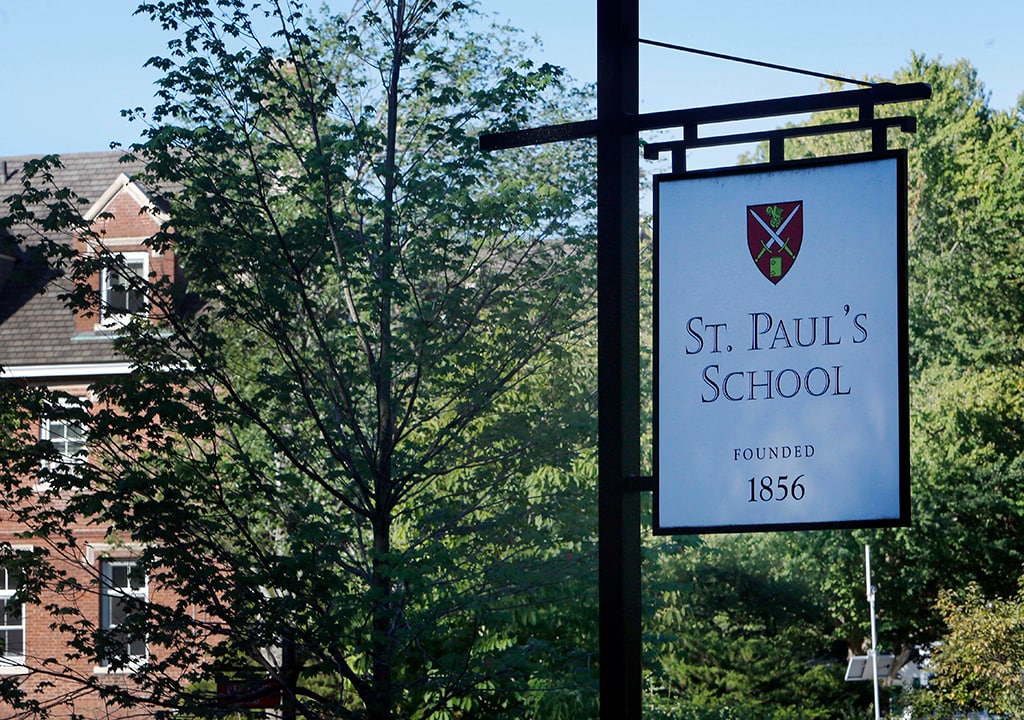
Privilege follows Khan’s 1-year stint as a coach, teacher, dorm advisor, and ethnographer-under-cover at his alma mater, St. Paul’s (with the consent of the school’s administration). Methodologically, Privilege adopts the practice of participant observation. In addition to this, Khan’s analysis works within the theoretical firmament of Bourdieu’s work on cultural capital who is memorably quoted to show what Khan’s research seeks to do: “many sociologists marvel at the ways in which the world changes. I marvel at how it stays the same.”[4] In Privilege, Khan examines changing markers of wealth in the youth, the curricular reinforcement of ideologies of inequality in students’ minds, and the mythologisation of the meritocracy as a function of wealth. The problematic of the book is a paradox: as overt forms of prejudice and exclusion are being replaced by equal-rights movements, representation, and liberal policies, how is it that “at the same time inequality has increased?”[5] Relatedly, the book makes an inquiry into how the upper echelon performs their class position in this modified climate. Khan submits that despite increased inclusivity in terms of race and class (through scholarship programs), private schools such as St. Paul’s continue to reproduce privilege and inequality by their pedagogy and institutional design.
Khan was a student at St. Paul’s 10 years prior to his research. He opens the book by acknowledging his positionality as an alumnus, and as the child of an upwardly mobile immigrant Pakistani father and Irish mother. The St. Paul’s he attended speciously bears little resemblance to the St. Paul under observation. Where he was ghettoised in a minority dorm and witnessed racial and gender discrimination, today, people of colour and low-income scholarship students are much more visible in the school. Instead of racist or classist social ostratcisation, it is students who are perceived to be unbecoming of the supposed high ‘calibre’ expected at St. Pauls who are now derogated.
This observation can be understood with the three “lessons of privilege” Khan locates as emanating from the rituals, ethos, and rhetoric at St. Paul.[6] First, students are taught that hierarchies are to be encountered as natural, and they can be leveraged to advance self-interests. Second, that experiences are more important than congenital traits, and in this way your lived experiences are the primary metric for adjudicating your merit – never mind the superstructures which have enabled and disabled these experiences. Finally, and most fascinatingly, Khan argues that the performance of privilege constitutes itself as “ease and openness in all social contexts.”[7] These teachings culminate in an elite who position their successes as cream rising to the top, as the earned survival of the fittest. Khan recalls a pupil disparaging a peer’s enrolment as mere nepotism, “‘That guy would never be here if it weren’t for his family…I don’t know why the school does that. He doesn’t bring anything to this place.’”[8] The subtext is clear: he doesn’t deserve to be here, butIdo, he is merely rich and incompetent, I’m both wealthy and meritorious.
Khan situates the logic of the meritocratic elite as fallout from the failure of collectivist movements which mobilised against group-based evaluations of worth, who lobbied for looking only at the “human capital” of individuals.[9] The rich appropriated this logic into their psychology, no longer presenting themselves as a coherent group differentiated from the rest of society and featherbedded by membership to a choate class. Instead, responsibility for successes and failures fall squarely on the disaggregated individual’s capacity to capitalise on hierarchies, experiences and opportunities.
As society has opened up partly because of such progressive social justice movements, antecedent displays of affluence such as engaging with high art and creating exclusive circles with impenetrable entry barriers are no longer viable. In their absence, Khan asserts that a cant of “ease” manifests wealth. The adolescent elite stylise their privilege through familiar coolness and comfort in any situation, indifference to high art, and by felicitously navigating the skeins of popular culture and abstruse texts. St. Paul’s imperative of interdisciplinary learning equips students with the faculty to strike pseudo-intellectual connections between various media, without engaging thoroughly or sincerely with any of them. Students learn to “create intimacy without acting like you are equal” by quickly rifling through the vast array of superficial subjects they can speak self-assuredly about.[10] Khan’s instantiation of ease is reminiscent of Frederic Jameson’s diagnosis of depthlessness[11] in late capitalistic societies, where – to invoke Marx – all that is solid has melted into air, and all that is holy has been profaned.[12]
Privilege is a highly readable, engaging work of ethnography. It abounds with strategically chosen aperçus and tactile descriptions of affluent youth culture that deftly demystify and articulate some abstract airs and inarticulable sentiments hanging around today’s rich – particularly airs whose cultural logic one may have intuited or been puzzled by at some point. He organises his material with such a strong sense of argumentative intent that in places, his supporting analysis is often obviated by the clarity of direction and thick observation that drive the book’s journey through St. Paul’s. Khan’s nuanced good humour and wholehearted immersion in a world with whose grooves he is familiar, have produced an ethnographic text that is at its most persuasive when it is reconstructing the cultural environment of St. Paul.
It falters only in its moments of myopia. Privilege is reluctant to theorise the political stakes of the new culture of the elite after graduation, and we are left wondering whether St. Paul is to be read as a microcosm whose dynamic endures in American colleges, and eventually the job market, or whether these patterns of behaviour evaporate when removed from the hallowed halls of St. Paul. While the concept of ease seems transferrable to the adult world, it remains unclear as to how indifference to high art would persist as the rich take their place in the historied institutions of boardrooms, galas, and country clubs. Further, Privilege could do more to qualify its arguments in the macro-networks of the elite beyond one school. The difficulty with this ethnography is that it is seems like too tenuous an extrapolation to generalise how, for example, perspectives on sexuality and gender are changing when Khan looks only at one queer person, juxtaposed with the student body president.
Still, Privilege has tremendous staying power in its ability to theoretically synthesise why greater representation does not weaken class solidarity and only recasts its culture through the ideological apparatus of the schooling system. Khan’s declared aim to map out “how elite culture works through the elevation of a small group not by their individual characters but by a social process of schooling” is contextually achieved.[13]
There is also much scope to elaborate on his insights in the wake of the social media explosion, which allows adolescents to reconstruct their class, identity, and intellect in the digital space. Social media as a medium lends itself to reducing education and intelligence to sound-bytes for clever captions and coolly chuffed-out Tweets. The students of St. Paul would be adept at performing their elitism online because the infrastructure of social media valorises intertextuality, nonchalance, and ease. A cursory scroll through Instagram confirms Khan’s instinct that the rich dilletantes have solidified their privilege by acting as if the unequal digital space is a meritocracy; social capital has been transmuted into internet clout. Today’s culture of wokeness – where saying the right thing at the right time is the first and only rule – is easier to game if your tutelage has been in the airy art of eloquence.
As Khan acknowledges towards the end of the book, growing inequality corresponding with the progressive movement of society, is not so much a paradox as it is irony. Class domination by the elite has adapted into murky, often unrecognisable iterations of itself, but it has not gone away. All that has really changed are the outfits of oppression, updated to pass tests of political correctness in today’s neoliberal society. The workings of “democratic inequality” in elite schools have nowhere else so honestly and rigorously been broken down. It is worth contemplating what kind of adults will emerge from this education in saying things without really knowing anything about them, and what kind of society so willingly platforms their easy chatter.
[1] Khan, Privilege: The Making of an Adolescent Elite at St. Paul’s School, p. 13
[2] Khan, Privilege: The Making of an Adolescent Elite at St. Paul’s School, p. 197
[3] Ibid, p. 14
[4] Ibid, p. 91
[5] Khan, Privilege: The Making of an Adolescent Elite at St. Paul’s School, p. 5
[6] Ibid, p. 14.
[7] Ibid, p. 71
[8] Ibid, p. 20
[9] Ibid, p. 12
[10]Ibid, p. 12
[11] Jameson, Cultural Logic of Late Capitalism
[12] Marx, Communist Manifesto
[13] Ibid, p. 162
 sanjana sheth
Leave a comment