where dreams do not dream: a state of cultural decline
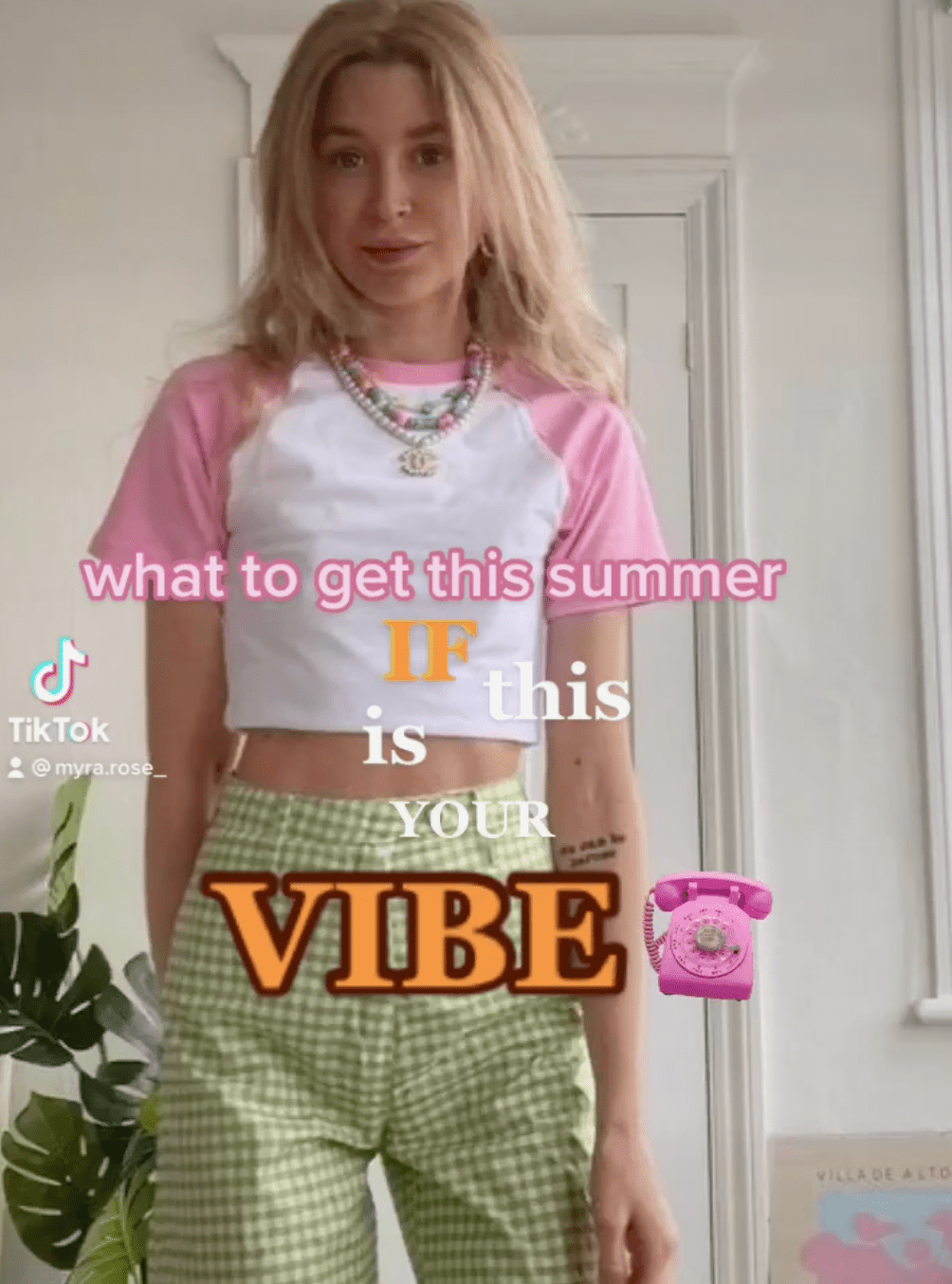
“Our mission is to inspire creativity and bring joy,” reads the first line of TikTok’s ‘About Us’ page.[1] A cursory scroll on the platform yields a cultural wasteland of belletristic vacuity and unimpeachable vibes; micro-influencers strategically bite their lips at the climax of songs written solely to go viral on the application, antiquated conventional movie stars founder with simple dance moves, Gen-Z diagnose three ordinary things that most people do as neuro-divergent attributes.[2] Sometimes this is punctuated by a cat’s charming yawn, or a comedic skit which elicits a wheezy laugh.[3]
Videos hit one after the other like a fusillade of snappy 15-second dopamine hits, and since not all of them deliver the high, the psychology of intermittent gratification keeps its users making good use of opposable thumbs, if not opposable criticality.[4] It is unclear whether the exercise is enjoyable or not – moreover, it is irrelevant. “Me scrolling through TikTok while vaping watching TV and writing a paper to prevent the chance of a critical thought occurring,” a young man says in a TikTok with a post-ironic deadpan in a low-lit room, as a nondescript indie song lulls the background.[5] The media is overwhelming. The numbness is comforting.
The paper investigates how TikTok can be understood through the conceptual framework of the culture industry. Its hypothesis submits that under late capitalism, the culture industry’s control over the public has been fostered and mediated by TikTok.
2. Methodology
The hypothesis of this paper is what Frederic Jameson described as a “periodizing hypothesis” whose methodology is a detailed histography made up of periodical events that cannot exclusively be read chronologically, stylistically, or quantitatively. Instead, such a hypothesis draws attention to a movement of society in a given moment as an effort to prescind a “cultural dominant: a conception which allows for the presence and coexistence of a range of very different, yet subordinate, features” through a review of literature and grounded theory.[6] It is not concerned with fringe or anomalistic patterns, rather with mainstream TikTok’s bolstering of the culture industry. This periodizing hypothesis qualifies its claim with 2 additional imperatives for the forthcoming analysis. First, it posits a qualitative difference between today’s totalitarian culture industry and that of Horkheimer and Adorno, not merely an increase in the degree of totalitarianism. Second, it submits that this difference can be traced back to a specific source – here, TikTok’s technical structure and popularity.
Further, the method of a periodizing hypothesis has been adopted to make it clear that the focus is not on a particular age group’s engagement with TikTok, nor the psychological conditions and consequences of the same. This hypothesis is interested in TikTok’s potency as a new technology and as an instrument of totalitarianism in the zeitgeist. To prove these claims, the first section will look at how new technology shapes our lives (4.1), it will situate TikTok amongst its technical peers (4.2), and outline the key infrastructural aspects of TikTok that are relevant mimetic tools (4.3). Next, TikTok’s relationship to the culture industry is laid out (5.1), its totalitarian tendencies are evaluated in light of the cultural logic of late capitalism (5.2), and counterarguments about its democratising potential are addressed (5.3).
3. Relevance
TikTok was launched to international audiences formally in 2018[7], and as of 2021, it boasts a mighty 1 billion monthly active users.[8] Its most popular creators like Addison Rae, Charli D’Amelio, and Lil Nas X have accrued millions of dollars, record deals, Netflix movies and viral, number-one hits.[9] In the first quarter of 2020, the rapaciously popular short-video social media platform, TikTok, was downloaded more than 2 billion times – the highest number of downloads for any application in a single quarter, ever.[10] On average, US TikTok users spend over 14 hours a month on the application.[11] Its engagement rate, or the frequency of interaction on the platform for micro-influencers is 17.96%.[12] For scale, SNS giants Instagram and YouTube have engagement rates of just 3.86% and 1.63% respectively. Irrefutably, the public is participating in the TikTok phenomenon in a manner distinct from other social media platforms.[13]
TikTok’s most influential creators are conferred with significant economic gains and social power. The once-discrete processes of personal expression and conventional labour to earn a living have bled into the behemoth of TikTok’s digital network, dereifying the dichotomous logic of work and recreation. Figures with over 10 million followers can expect to rake in between $50,000-$150,000 for sponsored content from brand collaborations and partnerships because of their sizable platform.[14] Moreover, popular creators are inducted into the pantheon of celebrity: they are interviewed by The Atlantic, The Times, Forbes and BBC;[15] they work with UNICEF;[16] they fraternise with Hollywood’s conventional stars;[17] they advertise for the world’s biggest brands.[18]
In Dialectic of Enlightenment, Horkheimer and Adorno trounce commodified entertainment’s vitiation of art, leisure, and free imagination. The purpose of the culture industry was to depoliticise the public through distraction, numbness, and totalitarianism. In new media (film, radio, TV) they see mass-produced commodities chuffed out to maintain capitalist relations of production, and to edulcorate an exploitative reality in the minds of people. By supplying an endless stream of interchangeable, vacuous media defers happiness and consciousness in favour of mental lethargy and numbed acquiescence to oppressive power systems. Totalitarianism undergirds the culture industry inasmuch as there is a monopoly of power preventing subversion or true imaginative play. Art, laughter, and individuality are denied to subjects under the culture industry, where there is only the consumption and creation of homogeneous, painfully uncritical content in the “same inflexible rhythm.”[19]
The concept of the culture industry was expounded with reference to art and media produced by entities external to the masses such as Hollywood studios and advertising firms. At their most optimistic, Horkheimer and Adorno might offer individual micro-subjectivity and democratic participation in art as possible resistance to propagandistic entertainment commodities. The agency (or at least, the ostensive agency) mandated by TikTok – choosing what to consume through the algorithm’s curatorial feedback system, choosing what to create with no technical restrictions of form or matter – set it apart from Hollywood or advertising agencies. Further, the weltering and compromised distinctions between creation, consumption, and labour complicate how TikTok interacts with the culture industry in its original formulation. The entanglement of agency with art and digital labour with capitalistic gains makes the theoretical inquiry into the state of the culture industry in the age of TikTok exigent and germane.[20]
4.1 The Medium is in Our DMs
Marshall McLuhan argues that “[t]he new media and technologies by which we amplify and extend ourselves constitute huge collective surgery carried out on the social body with complete disregard for antiseptics.”[21] He characterises technologies, tools, and media broadly as that which we see as extensions of ourselves.[22] Hammers are extensions of our hands, cars as extensions of our feet, and cameras of eyes.[23]
He proposes that technical innovations necessarily arrive without sensitivity to the radical ways they could alter the fabric of society. For example, when the book was popularised as the primary medium to tell a story or share information, there was little scrutiny paid to how pre-literate oral and numinous traditions were soon to be abandoned in favour of the book’s linear logic. Retrospectively we can see that it was not the substantive content of particular literature which had the most profound impacts on our ways of life, rather, it was the infrastructure of the printing press and book that valorised analogous cognitive and cultural processes. In McLuhan’s words, being caught up in “the ‘content’ of any medium blinds us to the character of the medium.”[24] Ideas are significant, but media are potent. Ideas take time to gather momentum and bleed into the way we interact, think, and organise. Media have the potential to totally restructure the scale of these interactions, thoughts, and organisations.
4.2 Platform Capitalism
The internet is a transformative tool that expands the breadth of the world knowable to humans, and expands the breadth of social existence to include a virtual dimension. Further, the smartphone – with its lightning-speed internet connection, compact frame, and sleek screen – is an extension of the palm that often, and regrettably, leaves us boasting about literally having ‘the world at our fingertips’ for we may access knowledge, services, and goods that are all ‘just one click away.’ The smartphone, which we scroll through for hours with our thumbs, has “tactilised” our relationship with the multiverses contained on the internet from news, to art, to sociality.[25]
About television, McLuhan admitted that “since it has affected the totality of our lives, personal and social and political, it would be quite unrealistic to attempt a ‘systematic’ presentation of such influence,” and this limitation only rings truer in the sprawling age of the internet and social media.[26] To scratch the surface of how these new technologies have had drastic psycho-sociological effects, Facebook’s ‘like’ re-configured expressing appreciation, the concept of a ‘friend’ was definitionally endowed with secondary virtual connotations, and a ‘profile’ generated an alter-ego of every user which projected a part of selfhood into cyberspace.[27] Tumblr’s ‘tagging’ system for posts trained a generation of users to self-objectify and visualise themselves as belonging to identifiable labels, aesthetics, and groups.[28]
Nick Srnicek noted that the 21st century’s cultural output was born out of ‘platform capitalism,’ which is sustained through the exploitation of a new kind of raw material – data.[29] This first principle of platform capitalism – data mining – has three important characteristics. First, platforms operate using ‘network effects,’ wherein the more people who are on the platform, and the more time they spend on it, the more value it generates not only for its corporate owners, but also for its users.[30]
Consequently, the second characteristic of platform capitalism is that its capitalists have an “intrinsic drive” to “push up against the limits of what we consider the private realm,” which has resulted in a slew of allegations of privacy violations, and accusations of spreading fake news.[31] Most apprehensions about big tech have been concentrated on this point of overt privacy violations and misinformation on these platforms – and this single-minded, legalistic or rights-based calculus elides the murkier, and far more politically impactful encroachments that these platforms make on the level of the creative, and the critical.[32] What Srnicek and others term ‘data’ is merely a euphemism for sensitive information about an individual’s habits, preferences, and intimate emotional patterns which are mined for profit-making marketing machinations. On a more abstract level, beyond the moral discomfort with data-driven targeted advertisements, platforms such as these embody the reified self,[33] riven inert and objectified; as Jia Tolentino writes, “selfhood has become capitalism’s last natural resource.”[34]
Most importantly, the third characteristic of these platforms is that they turn ‘content,’ which would include personal photographs, creative explorations such songs, dances, short films, skits and other forms of expression – into fungible commodities in the platform’s marketplace. Social media differs from mass media in that the former’s subjects are interpellated at once as content creators and content consumers. The imperative of platforms is to create new epistemologies which motivate users to generate and consume content which can fuel the platform’s engine. The next section looks at the epistemological realities enabled and disabled by TikTok’s novel technical structure.
4.3 TikTok, Mimesis’ Playground
In May 2019, The New York Times published an op-ed titled “How TikTok is Rewriting the World.”[35] It differentiated TikTok from other user-generated social media platforms, raving about how “it unapologetically embraces central control rather than pretending it doesn’t have it…the pool of content is enormous. Most of it is meaningless…let the creature grow tall and fall upon us all.”[36] The author argued that TikTok was melting away the traditional limits of content consumption and creation both through its dynamic, dominating algorithm, and through users’ voracious engagement with the platform.
Diana Zulli argues that both discursive and “interpersonal connection [are] structurally downplayed on TikTok” in favour of “imitation publics…a collection of people whose digital connectivity is constituted through the shared ritual of content imitation and replication” (see Fig. 1).[37] Mimesis, the catalyst of these ‘imitation publics,’ refers to the processes of memes’ transmission.[38] Zulli builds on a widely- accepted metaphorical mapping of Richard Dawkins’ cultural meme as an evolutionary mechanism that disseminates “units of information,” onto digital platforms.[39] A digital meme transmits “units of popular culture” that are propagated and appreciated by people well-versed in the mimetic ontologies of a closed digital ecosystem.[40] There are a number of structural conditions embedded in TikTok’s architecture, Zulli argues, that direct users to engage in repetitious acts of mimetic creation which neither carry interpersonal expressive significance, nor original premises.
Her work rightly assumes that visibility is an end in itself by users of any social media, some of whom may go on to profit off said visibility either through social or economic capital that comes with increased visibility on the platform.[41] However, it is necessary to clarify that this motivation flourishes in a much more alienating sense on TikTok, where visibility and validation are tersely divorced from users’ in-person networks. That is to say, the “global village” which adjudicates virality on the platform is involved in a different kind of ‘public’ – one that is populated by algorithmically-identified strangers from the cloud, and nowhere else.[42]
When users sign up for the TikTok, unlike other social media platforms, they are neither prompted to import their contacts to find offline friends, nor asked to link any other social media to transfer followers whose content can be prioritised. In fact, user profiles are uninformative and largely insignificant with only 80-character bios permitted to build a persona. Instead, upon signing up, users must select boilerplate interests like ‘music’ or ‘comedy’ or ‘DIY,’ which are the kinds of categories that eventually mature by being deconstructed into hyper-specific, discrete subcultures with continued use of the platform.
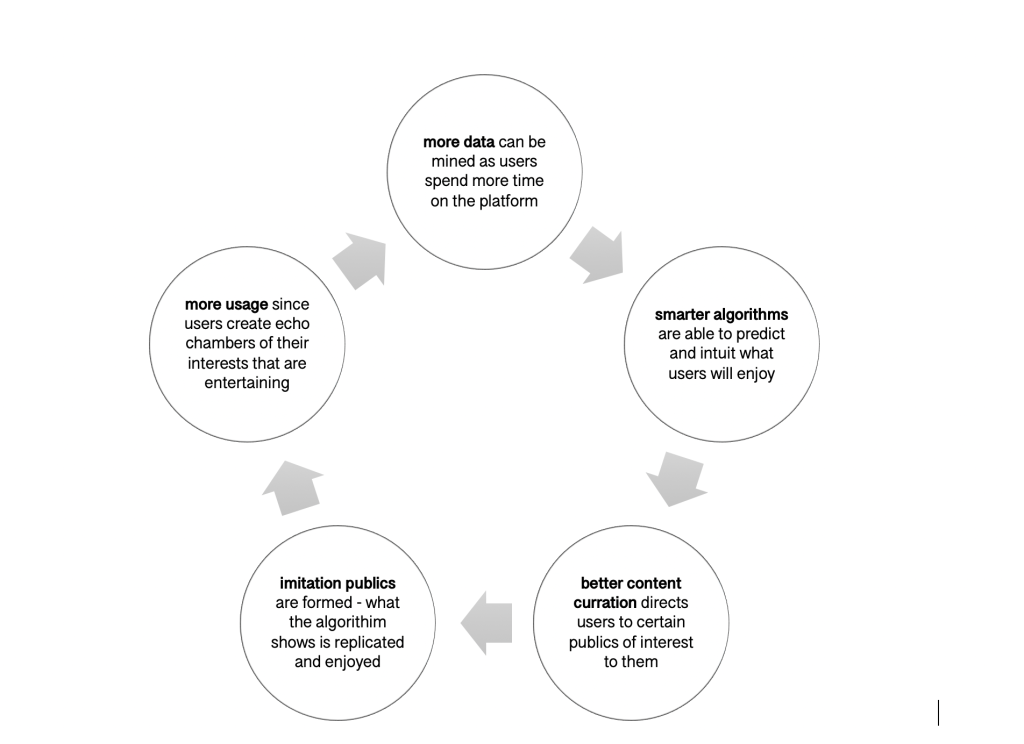
Secondly, users’ descent into cunningly-curated content niches begins right after TikTok configurates these initial responses. The algorithm concatenates a never-ending feed of videos on a ‘For You’ page that is personalised to users’ tastes. TikTok’s hyper-sensitive recommendation A.I. has been lauded as “unlike anything we’ve ever seen before” because of its receptivity to both active engagement such as liking, commenting, and sharing and also passive engagement like the amount of time spent before swiping past a video, or cross-platform cues.[43] On TikTok, that content which other platforms prioritise, (intentionally selected friends and family, favourite creators) is relegated to another tab – ‘Following’- which users have to manually toggle to in order to reach. Thus, TikTok is an aggressively content-centred medium that “embraces central control” by paternistically asserting that its algorithm knows better than its users’ active choices.
TikTok highlights the audios used in each video – these could be songs, quotes from films or televisions shows, speeches, or original sounds – as powerful devices of cybernetic suggestion. The music symbol next to the audio’s name is the only moving button on the user interface, and a marquee on the bottom of the screen ribbons through the video with ‘Use This Sound’ flashing. Both of these stylistic designs point to TikTok’s deliberate direction that users click on the audio in question to see all the videos that have been created with it. This indicates how an audio is being rendered in other TikToks – is there a replicable format associated with the audio? More often than not, the answer is yes, and audios are memetic structures users are invited to reproduce with minor edits – if any. Moreover, audios become easy roadmaps to increased visibility, since reproducing a trending audio would land a users’ video on the page where millions of other users are likely to see it when they click on the trending audios, as they are wont to do. Additionally, TikTok is the only large social media platform that allows users to use copywritten music or quotes in their content. While its loyalists cite this as a contrarian revolt against the constrictions of intellectual property laws, in practice it has made TikTok the only social media platform where others’ artistic works are hashed out without modifications or developments, with all the ingenuity of a stuck cassette.[44]
TikTok is a native video-editing application, meaning that users do not need to download another tool to create TikToks like the ones they see on their ‘For You’ pages. Video effects operate much like audios, except they have non-descript nomenclature such as ‘funny,’ ‘world,’ ‘trending,’ or ‘new,’ without any real sense of what the effect will produce. As a result, users are far more likely to opt into a video effect when they see another creator using it, and click on its name from that video to replicate or save for later. Essentially, both audios and video effects encourage replication to plumb at visibility, since seeing established creators or appealing TikToks perform in a particular way reinforces particular patterns of cultural production. Thus, mimetic replication is inscribed into the competitive framework of this platform.
5.1 The Culture Industry – Trends
TikTok is a site for exploding the boundaries between creative expression and playful leisure on the one hand, and coerced labour, and ideological interpellation on the other. At once, the dual processes of creation and consumption act to indoctrinate subjects into a world where their time and ideas can be commodified for economic capital, social posturing within a community, and cathartic release from the alienation of life under late capitalism. TikTok achieves these in simultaneity by synthesising the logic of production with the logic of art – one demands constant efficiency-maximising output in a competitive marketplace, the other demands the collage of language, music, film, and entertainment into a finished work. In the Dialectic of Englightment, Horkheimer and Adorno write that “[t]he irreconcilable elements of culture, art, and amusement have been…brought under a single false denominator: the totality of the culture industry. Its element is repetition.”[45]
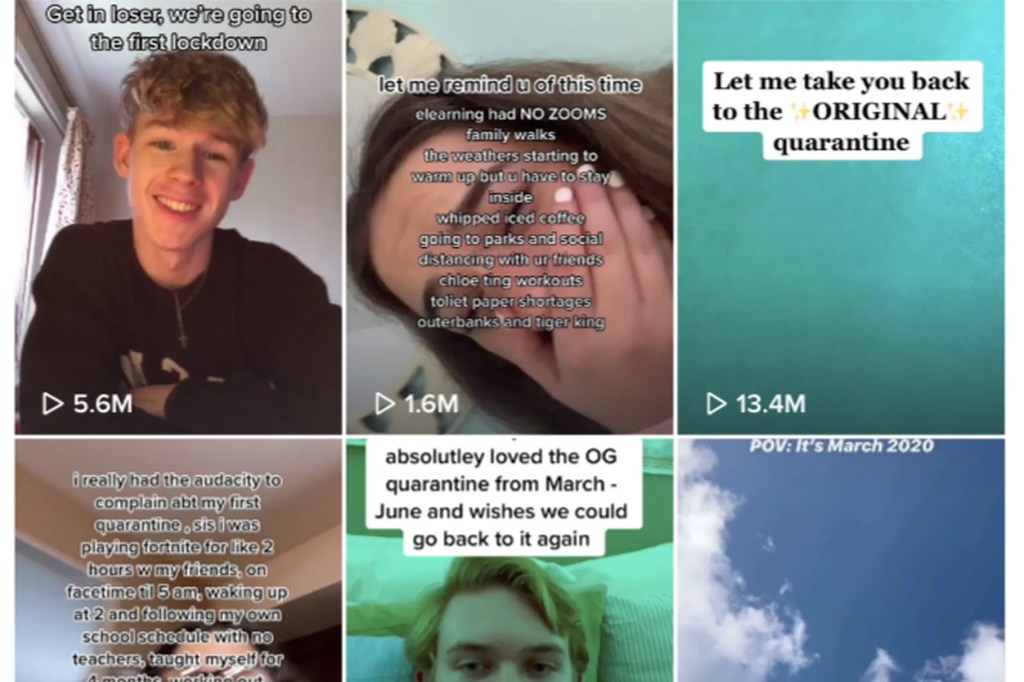
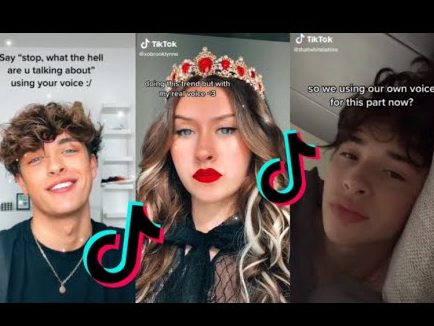
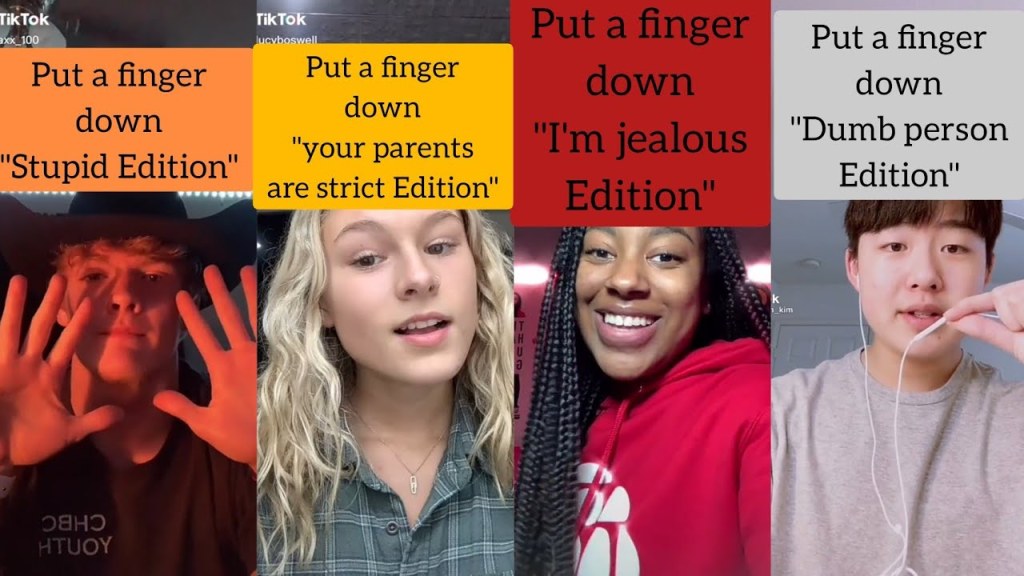
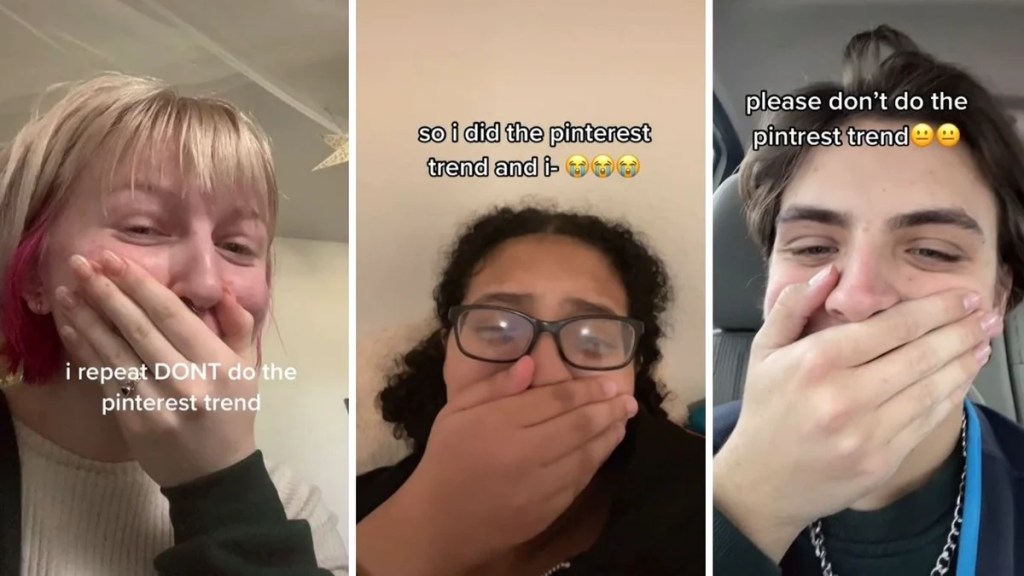
Once TikTok’s algorithm decides what is trending, the mimetic structures of the platform incentivise (or rather, instruct) creators to churn out repetitions of ‘new’ conformist content. Horkheimer and Adorno observed that within a totalitarian culture industry, there are “types recurring cyclically as rigid invariants.”[46] Where they were referring to mass media’s well-worn cinematic clichés or predictable chord arrangements as ‘types,’ the compilations of TikTok trends (see Fig. 2.1-5) plucked over the years showcase how the ‘types’ which recur on TikTok are arranged for different ends. Types, here, come together as an eternal “algo-ritournelle,” that is, a “meta-loop,” which “has neither beginning nor end” and is an omnivore of cultural consumption – scarfing down gestures, language, music, experiences, and philosophies into one speciously meaty but specular trend.[47]
The discursive effect of a viral trend is that everyone is invited to participate in it – to ‘make it their own,’ within their niche echo chamber, but without straying too far from its basic premise. These interventions of the subject generally occur in registers of pseudo-individuality, since there is a larger trap of relatability all creators are held hostage in order to be seen on the platform.[48] This imperative of being seen, understood, and appreciated sets up these pseudo-individual variations that must at once differentiate the self, yet at the same time warm alienated subjects with a sense of community that is otherwise absent from their fragmented lives.
As Horkheimer and Adorno write, “[s]omething is provided for everyone so that no one can escape; differences are hammered home and propagated,” inasmuch as variations are encountered with a kind of high: to recognise a variation or adaptation of a trend, a user is validated as part of the in-group, well-versed in the mimetic ontology of the group.[49] Each act of creation in a trend cycle is satisfying irrespective of the quality of the creation, since the fear of missing out on a cultural moment is so stark, the threat of irrelevancy so debilitating, and hence “enjoyment is giving way to being there and being in the know, connoisseurship by enhanced prestige.”[50] Then, any additional differentiation made by a video is championed as innovation, despite these differentiations’ subscription to the same format and ideological scope of all the videos of the trend as well as the broader frame of social acceptability. Over the 3 years of its existence, dominant trends have contented themselves with the overarching categorical pandering and creative limitations of time, content, and tone: “the machine is rotating on the spot.”[51]
5.3 The Culture Industry – Late Capitalist Ideology
Our brains are what Mark Fisher calls “’too wired to concentrate’” and strapped into “the communicative sensation-stimulus matrix of texting, YouTube and fast food” sustaining life on “the constant flow of sugary gratification on demand.”[52] In 2021, the ‘Goldfish Effect’ observes that most people’s attention spans have shrunk to that of a couple of seconds due this communicative sensation-stimulus matrix – now even a 5 minute YouTube video would prove too much of a mental chore for most plugged-in people.[53] The success of TikTok’s totalitarianism is inextricably linked to the unmoored postmodern subject – sociologically and psychologically. Under late capitalism, Frederic Jameson writes, “the alienation of the subject is displaced by the fragmentation of the subject.”[54]
Capitalist realism has infected every aspect of social and economic life, to the point that ideological interpellation of subjects does not need to be explicitly communicated, for it is implicitly present in the postmodern logic of all human interactions and processes including aesthetics and recreation.[55] To this end, rather than substantively conveying pro-capitalist slogans, Jameson’s startlingly accurate characterisation of late capitalist culture shows how it reproduces the status quo in part through the decline of culture. The features of a cultural decline include how style is cannibalised, syntagmatic structures of meaning melt into nothingness and intertextuality, interiority, depth, and the subconscious flatten into degraded effluvia, and eclectic fragments hang in limbo between the outmoded bounds of high and low art which have been appropriated into one embroiled smorgasbord. To invoke the Dialectic of Enlightenment once again, “[b]eing nothing other than style, it divulges style’s secret: obedience to the hierarchy.”[56]
aesthetic production today has become integrated into commodity production generally: the frantic economic urgency of producing fresh waves of ever more novel-seeming goods (from clothing to airplanes), at ever greater rates of turnover, now assigns an increasingly essential structural function and position to aesthetic innovation and experimentation.
jameson, postmodernism, or the cultural logic of late capitalism, p. 56
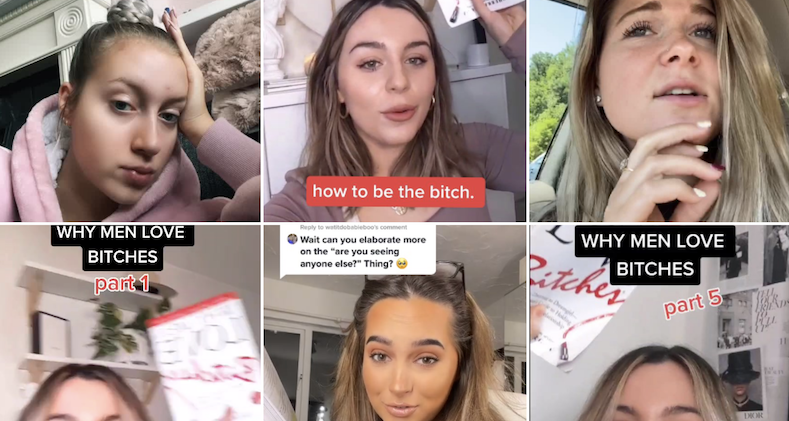
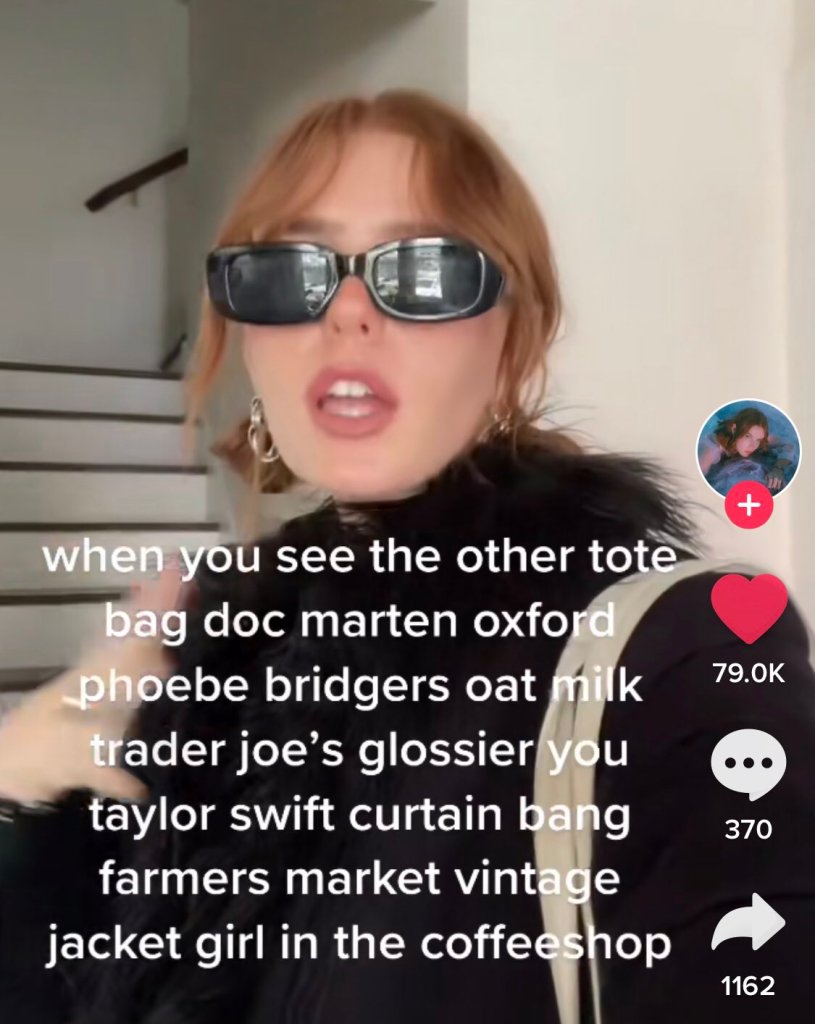
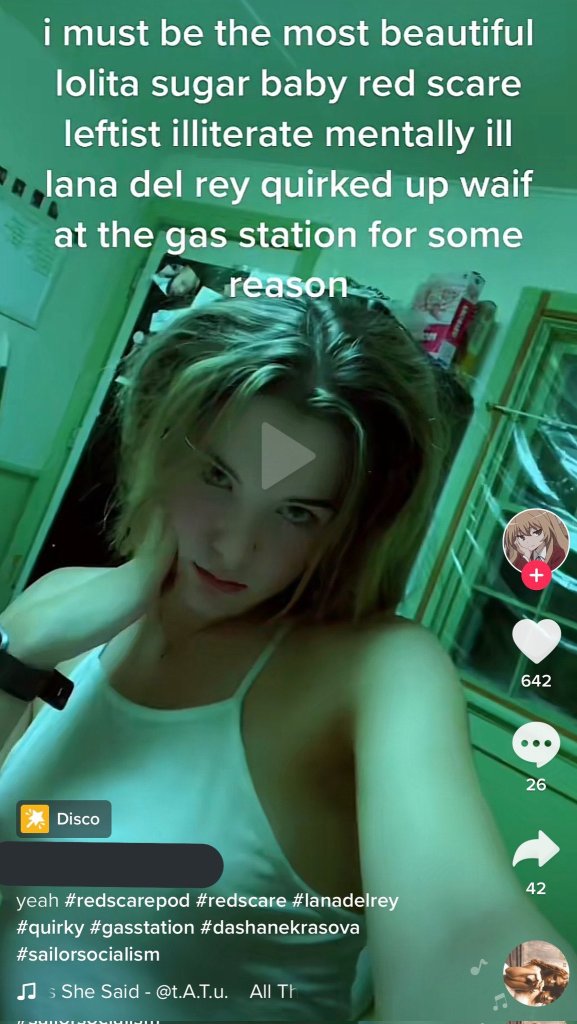
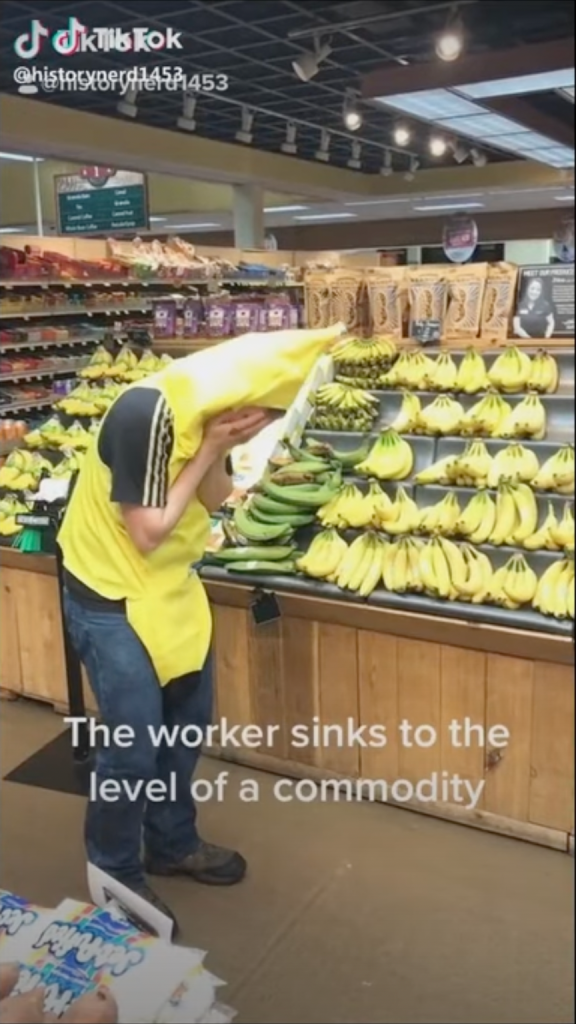
Fig. 3.1 and 3.2 show TikToks drowning in intertextual cultural references of political theory, grocery stores, artists, colleges, cosmetics, podcasts, haircuts, aesthetic categories, and brands. This is Jameson’s “‘degraded’ landscape of schlock and kitsch” where aesthetic production is made up of bastardised “materials they no longer simply ‘quote,’… but incorporate into their very substance.”[57] TikToks made with the intent to gain traction by rule must contain luridly glimmering images which, even when acknowledging tragedy critique, must continue to reify imagery and amuse others. As Jameson writes, “The world thereby momentarily loses its depth and threatens to become a glossy skin, a stereoscopic illusion, a rush of filmic images without density.”[58] By this norm, TikTok fulfils the culture industry’s bleakest end of using laughter to cheat people from true happiness.
5.4 Democracy, or Manipulation of the Masses
TikTok’s defenders argue that since virality on TikTok is not contingent upon existing offline social networks, and since any video from any creator can be picked up by the algorithm so long as it is compelling enough, the platform is a great democratiser which can foster dialogue, diversity, and decentralised free-flowing creative expression.[59] They see the native-video editing and negligible costs of production required to make a video (as opposed to the expensive set-ups required to build a following on YouTube or Instagram) as a welcoming infrastructure. If nobody can choose what they see on their curated ‘For You’ pages, then the impartial, highly-sophisticated A.I. that determines what content is pushed is an equalising agent, and the algorithm an unintelligible yet democratising figure.
There are two problems with this defence. First, as has already been shown, creators are cybernetically compelled to conform through imitation publics rather than pushing the creative envelope, which turns the dream of democracy into a sheepish tyranny of the masses. Returning again to the Dialectic of Enlightenment, “anyone who does not conform is condemned to an economic impotence which is prolonged in the intellectual powerlessness of the eccentric loner. Disconnected from the mainstream, he is easily convicted of inadequacy.”[60]
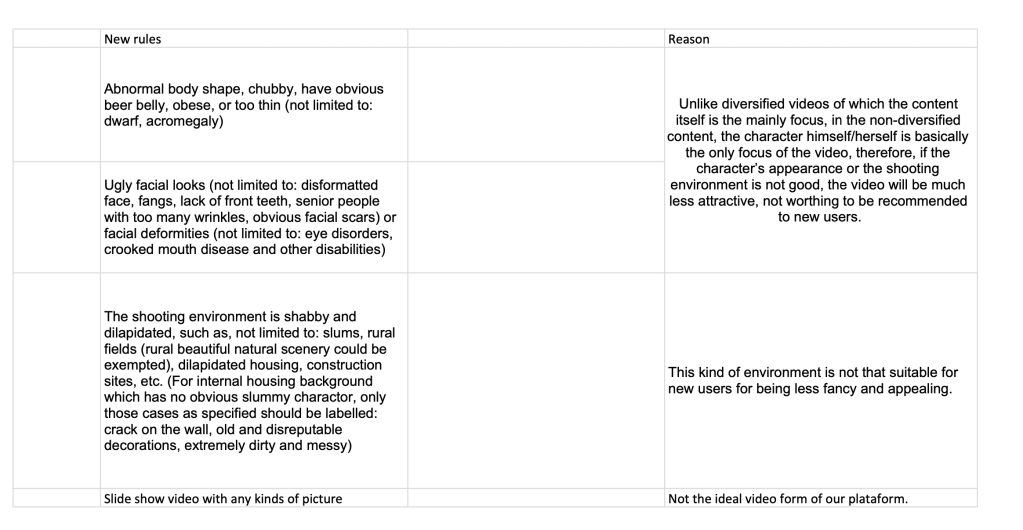
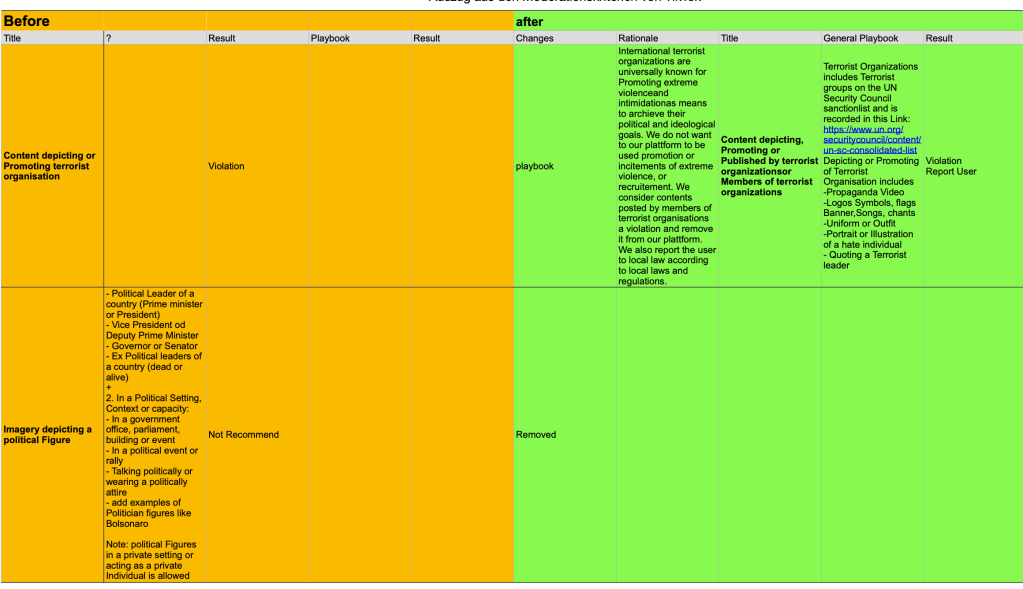
Second, there is overwhelming evidence that TikTok both manipulates its algorithm to promote political censorship (especially in and about the Chinese government and its actions), and that its algorithm itself is a horrifically prejudicial code.[61] Two leaked policy documents intimating moderators and staff about changes in the algorithm’s operation expose its suppression of lower-class content and unattractive people (see Fig. 4.1) along with ‘controversial’ political content (see Fig. 4.2) for fear that such content would compromise new user retention rates.[62] Worse, even beyond this unconscionable filtering system, another leaked communication proved that TikTok praestituo determined which hashtags would be trending in forthcoming days and colluded with large media corporations by sending them a newsletter with 10 trending hashtags who could accordingly tailor their content and advertisements to gain traction and revenue.[63] Thus, as Horkeimer and Adorno predicted, “[t]he industry bows to the vote it has itself rigged…by artfully sanctioning the demand for trash, the system inaugurates total harmony.”[64]
6. The State of Totalitarianism and The Decline of Culture
From its very infrastructure to its content and usage, TikTok seeks to supress criticality with an endless stream of content. Its totalitarian tendencies are what make it proprietary in the context of social media platforms, and what make it so appealing to users. From its mimetic structures, compromised algorithm, to its hot airs of content, TikTok is Goliath pretending to be David. It positions itself as a decentralised, democratic, diverse corner of the internet where 15-seconds are all it takes to spread a laugh or serenade a stranger with a new song. In reality, it is a carnival of distractions not unlike the Greek myth of the lotus tree; cybernetic totalitarianism and comfortable numbness are recast as a bottomless pit of fun, where we – the lotus eaters who never want to leave – watch the moving colours and formulaic songs for hours and hours on end until the trenchant irony of the name of the application itself is soon lost on us. And even worse, as TikTok becomes the centre of the creative universe – the arbiter of trends, quality, and relevance – the culture industry metronomically produces dafter and dafter art for our truncated attention spans, as we glaze over, suspended in a state of perpetual distraction, just to make it all a little more bearable.
Works Cited
Alex, Dylan. “The History of TikTok: From Musical.ly to the Number 1 App in the World.” Dexerto, 8 May 2021, https://www.dexerto.com/entertainment/the-history-of-tiktok-1569106/.
Allard, Laurence. (2021). D’une boucle l’autre, TikTok et l’algo-ritournelle : performer entre rage et ennui en temps de pandémie.
Anderson, Katie Elson (2020). Getting acquainted with social networks and apps: it is time to talk about TikTok. Library Hi Tech News, 37(4), 7–12. doi:10.1108/lhtn-01-2020-0001
Applegate, Matt; Cohen, Jamie (2017). Communicating Graphically. Cultural Politics, 13(1), 81–100. doi:10.1215/17432197-3755204
Biddle, Sam, et al. “TikTok Told Moderators: Suppress Posts by the ‘Ugly’ and Poor.” The Intercept, 16 Mar. 2020, https://theintercept.com/2020/03/16/tiktok-app-moderators-users-discrimination/.
Brown, Abram. “Tiktok’s 7 Highest-Earning Stars: New Forbes List Led by Teen Queens Addison Rae and Charli D’Amelio.” Forbes, Forbes Magazine, 7 Oct. 2021, https://www.forbes.com/sites/abrambrown/2020/08/06/tiktoks-highest-earning-stars-teen-queens-addison-rae-and-charli-damelio-rule/?sh=440993985087.
Chapple, C. 2020. TikTok crosses 2 billion downloads after best quarter for any app ever. Sensor Tower, 29 April [online access at https://sensortower.com/blog/tiktok-downloads-2-billion last accessed 23 September 2020]
Chayka, Kyle. “Tiktok and the Vibes Revival.” The New Yorker, 26 Apr. 2021, https://www.newyorker.com/culture/cultural-comment/tiktok-and-the-vibes-revival.
Dawkins, Richard. 2006. The Selfish Gene: 30th Anniversary Edition. Oxford: Oxford University Press.
Deller, Rose, and Posted In: Economics | LSE Festivals | Science and Tech. “LSE LIT Fest 2017: Platform Capitalism by Nick Srnicek.” LSE Review of Books, 9 Mar. 2021, https://blogs.lse.ac.uk/lsereviewofbooks/2017/02/24/lse-lit-fest-2017-platform-capitalism-by-nick-srnicek/.
Fisher, Mark. Capitalist Realism: Is There No Alternative? Zero Books, 2010.
Fung, Isaac Chun-Hai et al. “Public Health Implications of Image-Based Social Media: A Systematic Review of Instagram, Pinterest, Tumblr, and Flickr.” The Permanente journal vol. 24 (2020): 18.307. doi:10.7812/TPP/18.307
Geyser, Werner. “How Much Do Tiktokers Make? [Bonus Tiktok Influencer Earnings Estimator].” Influencer Marketing Hub, 22 Sept. 2021, https://influencermarketinghub.com/how-much-do-tiktokers-make/.
Geyser, Werner. “TikTok Statistics – Revenue, Users & Engagement Stats (2021).” Influencer Marketing Hub, 28 Sept. 2021, https://influencermarketinghub.com/tiktok-stats/.
Gray, J. E. (2021). The geopolitics of ‘platforms’: the TikTok challenge. Internet Policy Review, 10(2). https://doi.org/10.14763/2021.2.1557
Hearn, Greg (2020). The Future of Creative Work || Playing with TikTok: algorithmic culture and the future of creative work. , 10.4337/9781839101106(), 172–188. doi:10.4337/9781839101106.00020
Helmers, Helmer, Nina Lamal, and Jamie Cumby. ” Introduction: The Printing Press as an Agent of Power”. In Print and Power in Early Modern Europe (1500–1800), (Leiden, The Netherlands: Brill, 2021) doi: https://doi.org/10.1163/9789004448896_002
Herrman, John. “How TikTok Is Rewriting the World.” The New York Times, The New York Times, 10 Mar. 2019, https://www.nytimes.com/2019/03/10/style/what-is-tik-tok.html.
Horkheimer, Max, et al. Dialectic of Enlightenment. Stanford University Press, 2020.
Jameson, Fredric. Postmodernism, the Cultural Logic of Late Capitalism. Duke University Press, 1991.
Jbursz. “TikTok Says 1 Billion People Use the App Each Month.” CNBC, CNBC, 27 Sept. 2021, https://www.cnbc.com/2021/09/27/tiktok-reaches-1-billion-monthly-users.html.
Jeffries, Stuart. “Why a Forgotten 1930s Critique of Capitalism Is Back in Fashion.” The Guardian, Guardian News and Media, 9 Sept. 2016, https://www.theguardian.com/books/2016/sep/09/marxist-critique-capitalism-frankfurt-school-cultural-apocalypse.
Jim Euchner (2021) Marshall McLuhan and the Next Normal, Research-Technology Management, 64:6, 9-10, DOI: 10.1080/08956308.2021.1974777
Joseph, Daniel. “Two-Faced.” Real Life, 9 Aug. 2018, https://reallifemag.com/two-faced/.
Kenneth E. Boulding (1965). The Medium and the Message. The Canadian Journal of Economics and Political Science / Revue canadienne d’Economique et de Science politique, 31(2), 268–273. doi:10.2307/140071
Kumar, Pushpesh. (2020). TikTok Ban in India and ‘That Vacuum in My Life”.
Levinson, Paul. McLuhan in an Age of Social Media. Connected Editions, 2016.
Lukács, History and Class Consciousness, trans. R. Livingstone (Cambridge: MIT Press, 1971), 131.
Matsakis, L. (2019b). On TikTok, there is no time. Wired, 3 March. Retrieved from https://www.wired.com/story/tiktok-time/.
McLuhan, M., Fiore, Q., & Agel, J. (1967). The medium is the massage. New York: Bantam Books. Chicago (Author-Date, 15th ed.).
McLuhan, Marshall, Understanding Media; the Extensions of Man. New York :Signet Books, 1966.
McRobbie, A. (1996). All the world’s a stage, screen or magazine: when culture is the logic of late capitalism. Media, Culture & Society, 18(2), 335–342. doi:10.1177/016344396018002009
Mohsin, Maryam. “10 Tiktok Statistics You Need to Know in 2021 [March Data].” Oberlo, Oberlo, 25 Nov. 2021, https://www.oberlo.in/blog/tiktok-statistics.
Mohsin, Maryam. “10 Tiktok Statistics You Need to Know in 2021 [March Data].” Oberlo, Oberlo, 25 Nov. 2021, https://www.oberlo.in/blog/tiktok-statistics.
Nieborg, D. B., & Poell, T. (2018). The platformization of cultural production: Theorizing the contingent cultural commodity. New Media & Society, 20(11), 4275-4292 . https://doi.org/10.1177/1461444818769694
Peppas, Laura. “The Goldfish Effect: Why We’re Struggling with Forgetfulness.” HerCanberra, 7 Sept. 2021, https://hercanberra.com.au/life/conversation/the-goldfish-effect-why-were-struggling-with-forgetfulness/#:~:text=Labelled%20’The%20Goldfish%20effect’%3B,to%20that%20of%20a%20goldfish.&text=If%20we%20force%20our%20brain,becomes%20quickly%20overwhelmed%20and%20overloaded.%E2%80%9D.
Peterson, Tim. “TikTok Courts Publishers with Weekly Newsletter Previewing Trending Hashtags.” Digiday, 3 Sept. 2019, https://digiday.com/media/tiktok-courts-publishers-weekly-newsletter-previewing-trending-hashtags/.
Riemer Professor of Information Technology and Organisation, Kai, and Sandra Peter Director. “Love It or Hate It, Tiktok Is Changing the Music Industry.” The Conversation, 10 Dec. 2021, https://theconversation.com/love-it-or-hate-it-tiktok-is-changing-the-music-industry-171482.
Ross, Alex, and Nicholas Lemann. “The Frankfurt School Knew Trump Was Coming.” The New Yorker, 5 Dec. 2016, https://www.newyorker.com/culture/cultural-comment/the-frankfurt-school-knew-trump-was-coming.
Ross, Alex, et al. “The Naysayers, Pop Culture and Power.” The New Yorker, 8 Sept. 2014, https://www.newyorker.com/magazine/2014/09/15/naysayers.
Sandre, Andreas. “5,000 Reasons to like TikTok.” Medium, Digital Diplomacy, 10 Jan. 2020, https://medium.com/digital-diplomacy/5-000-reasons-to-like-tiktok-11bc0c08dbfa.
Shifman L (2012) An anatomy of a YouTube meme. New Media & Society 14(2): 187–203.
Shifman L (2013) Memes in a digital world: reconciling with a conceptual troublemaker. Journal of Computer-Mediated Communication 18(3): 362–377.
Shpolberg, Masha. “New Age, New Media: TikTok as Ritual Practice .” Media Fields Journal, 2021.
Southwick, Lauren et al. “Characterizing COVID-19 Content Posted to TikTok: Public Sentiment and Response During the First Phase of the COVID-19 Pandemic.” The Journal of adolescent health : official publication of the Society for Adolescent Medicine vol. 69,2 (2021): 234-241. doi:10.1016/j.jadohealth.2021.05.010
Srnicek, Nick. “The Challenges of Platform Capitalism: Understanding the Logic of a New Business Model.” IPPR, 21 Sept. 2017, https://www.ippr.org/juncture-item/the-challenges-of-platform-capitalism.
Strapagiel, L. (2019), “How TikTok made “Old town road” become both a meme and a banger”, Buzzfeed News, available at: www. buzzfeednews.com/article/laurenstrapagiel/ tiktok-lil-nas-x-old-town-road
Tait, A. (2019). TikTok has created a whole new class of influencer. Vice, 15 May. Retrieved from https://www.vice.com/en_in/article/597dbn/tiktok-what-uk-stars-influencer.
Tolentino, Jia, et al. “How TikTok Holds Our Attention.” The New Yorker, 20 Sept. 2019, https://www.newyorker.com/magazine/2019/09/30/how-tiktok-holds-our-attention.
Tolentino, Jia. Trick Mirror: Reflections on Self-Delusion. , 2019. Print.
Walton, Stuart. “How the Frankfurt School Diagnosed the Ills of Western Civilisation: Aeon Essays.” Aeon, Aeon Magazine, 2017, https://aeon.co/essays/how-the-frankfurt-school-diagnosed-the-ills-of-western-civilisation.
Wang, Jufang. (2020). From banning to regulating TikTok: Addressing concerns of national security, privacy, and online harms.
Wei-Ying Ma. 2020. Democratizing Content Creation and Dissemination through AI Technology. In Proceedings of WWW ’20: The Web Conference 2020 (WWW ’20), April 20-24, 2020, Taipei, Taiwan. ACM, New York, NY, USA, https://doi.org/10.1145/3366423.3382669
Zulli, D., & Zulli, D. J. (2020). Extending the Internet meme: Conceptualizing technological mimesis and imitation publics on the TikTok platform. New Media & Society, 146144482098360. doi:10.1177/1461444820983603
[1] TikTok, “About Us.”
[2] Chayka “Tiktok and the Vibes Revival.” See this New Yorker article for more context on the resurgence of the ‘vibe’ as mediated by TikTok.
[3] Strapagiel, “How TikTok made “Old town road” become both a meme and a banger”
[4] Matsakis, “On TikTok, there is no time.”
[5] Tait, “TikTok has created a whole new class of influencer.”
[6] Jameson, Postmodernism, or The Cultural Logic of Late Capitalism, p. 4
[7] TikTok’s basic infrastructure of rapid video-sharing and editing has been around in earlier iterations of the application owned and developed by the same company. In September of 2016, Chinese company ByteDance introduced video-sharing social networking site (“SNS”) Douyin (抖音) to domestic audiences. The next year, ByteDance acquired another short video application Musical.ly, which had been available to international markets from 2014 and the company ran both Douyin and Musical.ly as two separate entities – the former for Chinese users, and the latter for global users. Although it was in November 2017 that Douyin was rebranded as ‘TikTok’ and made available to international audiences, it was not until August 2018, when TikTok and Muslical.ly were merged into TikTok that the application truly took off as a cosmopolitan SNS.
[8] Bursztynsky, “TikTok says 1 billion people use the app each month.”
[9] Smith, “The history of TikTok: From Musical.ly to the number 1 app in the world.”
[10] Chappel, “The Best Quarter For Any Application Ever: TikTok.”
[11] Geyser, “TikTok Statistics – Revenue, Users & Engagement Stats”
[12] Geyser, “TikTok Statistics – Revenue, Users & Engagement Stats”
[13] Countries with tense political relations with China have raised concerns about the privacy of user data as an issue of national safety. Ex-president Trump threatened to ban the application for fear that it was being abused by the Chinese government, but his unsubstantiated (and eventually, abandoned) threat of censoring TikTok hardly made a dent in the application’s usage in the USA. Meanwhile, in India, just as the application was beginning to gain immense traction – most of the biggest creators on the platform were Indian, voices of dissent were picking up momentum – the central government enacted a ban against the application in 2020. Although alternatives to TikTok with analogous structures have sprung up, they have not been successful in replicating TikTok’s level of mass engagement.
[14] Geyser, “How Much do TikTokers Make?”
[15] Brown, “TikTok’s 7 Highest-Earning Stars: New Forbes List Led By Teen Queens Addison Rae And Charli D’Amelio”
[16] Kallen, “TikTok Fame Is Creating The Next Generation of Celebrities”
[17] Shaw, “Does being ‘TikTok famous’ actually make you money?”
[18] Shaw, “Does being ‘TikTok famous’ actually make you money?”
[19] Horkheimer and Adorno, Dialectic of Enlightenment, p. 94
[20] The Aeon urges of the relevance of the concept of the totalitarian culture industry today by asserting that “shamelessly infantile principle of mindless play; the transmutation of collectivity into social media’s mere connectivity: these are the lineaments of a culture that is not the spontaneous production of free human beings, but rather something done to them in their unfreedom.”
[21] McLuhan, Understanding Media, p. 76
[22] Tools, media, technology used interchangeably
[23] “I wish my eyes could take photos,” reads countless posts online,
[24] McLuhan, Understanding Media, p. 9
[25] Bilem, “TikTok, Towards a Gestural Web?”
[26] McLuhan, Understanding Media, p. 349
[27] Fung et al, “Public Health Implications of Image-Based Social Media.”
[28] Fung et al, “Public Health Implications of Image-Based Social Media.”
[29] Srnicek, “The Challenges of Platform Capitalism: Understanding the Logic of a New Business Model.”
[30] Deller, “LSE LIT Fest 2017: Platform Capitalism by Nick Srnicek.”
[31] Srnicek, “The Challenges of Platform Capitalism: Understanding the Logic of a New Business Model.”
[32] Gray, “The geopolitics of ‘platforms.’”
[33] Lukács writes succinctly on reification in History and Class Consciousness on page 131: “What is important is to recognise clearly that all human relations (viewed as the objects of social activity) assume increasingly the form of objectivity of the abstract elements of the conceptual systems of natural science and of the abstract substrata of the laws of nature. And also, the subject of this ‘action’ likewise assumes increasingly the attitude of the pure observer of these – artificially abstract – processes, the attitude of the experimenter.”
[34] Tolentino, Trick Mirror, p. 76
[35] Herrman, “How TikTok is Rewriting The World.”
[36] Herrman, “How TikTok is Rewriting The World.”
[37] Zulli and Zulli, “Extending the Internet meme: Conceptualizing technological mimesis and imitation publics on the TikTok platform,” p. 7 (italics added).
[38] Shifman, “Memes in a digital world: reconciling with a conceptual troublemaker.”
[39] Dawkins, The Selfish Gene
[40] Shifman, “Memes in a digital world: reconciling with a conceptual troublemaker,” p. 367
[41] See Abidin, “Mapping Internet Celebrity on TikTok: Exploring Attention Economies and Visibility Labours” for more information about the intersection of visibility and labour.
[42] McLuhan, Understanding Media
[43] Zha, “The Unique Power of TikTok’s Algorithm.”
[44] Reimar et al, “Love it or hate it, TikTok is changing the music industry.”
[45] Horkheimer and Adorno, Dialectic of Enlightenment, p. 108
[46] Horkheimer and Adorno, Dialectic of Enlightenment, p. 98
[47] Allard, “D’une boucle l’autre, TikTok et l’algo-ritournelle.”
[48] This phenomenon is explained by Horkeimer and Adorno on page 125: “The individual trait is reduced to the ability of the universal so completely to mold the accidental that it can be recognized as accidental…The peculiarity of the self is a socially conditioned monopoly commodity misrepresented as natural… Pseudoindividuality is a precondition for apprehending and detoxifying tragedy: only because individuals are none but mere intersections of universal tendencies is it possible to reabsorb them smoothly into the universal.”
[49] Horkheimer and Adorno, Dialectic of Enlightenment, p. 97
[50] Horkheimer and Adorno, Dialectic of Enlightenment, p. 128
[51] Horkheimer and Adorno, Dialectic of Enlightenment, p. 106
[52] Fisher, Capitalist Realism, p. 24
[53] Peppas, “The Goldfish Effect: Why We’re Struggling with Forgetfulness.”
[54] Jameson, Postmodernism, or The Cultural Logic of Late Capitalism, p. 63
[55] See Fisher, Capitalist Realism, chapter 1, ‘It’s easier to imagine the end of the world than the end of capitalism’
[56] Horkheimer and Adorno, Dialectic of Enlightenment, p. 103
[57] Horkheimer and Adorno, Dialectic of Enlightenment, p. 56
[58] Horkheimer and Adorno, Dialectic of Enlightenment, p. 77
[59] Sandre, “5,000 Reasons to like TikTok.”
[60] Horkheimer and Adorno, Dialectic of Enlightenment, p. 106
[61] Biddle, Sam, et al. “TikTok Told Moderators: Suppress Posts by the ‘Ugly’ and Poor.”
[62] Biddle, Sam, et al. “TikTok Told Moderators: Suppress Posts by the ‘Ugly’ and Poor.” Full version of the political content policy (Fig. 4.2) can be accessed here: https://cdn.netzpolitik.org/wp-upload/2019/11/tiktok-auszug-moderationsregeln-abschrift-1.pdf
[63] Peterson, Tim. “TikTok Courts Publishers with Weekly Newsletter Previewing Trending Hashtags.”
[64] Horkheimer and Adorno, Dialectic of Enlightenment, p. 106
 sanjana sheth
Leave a comment