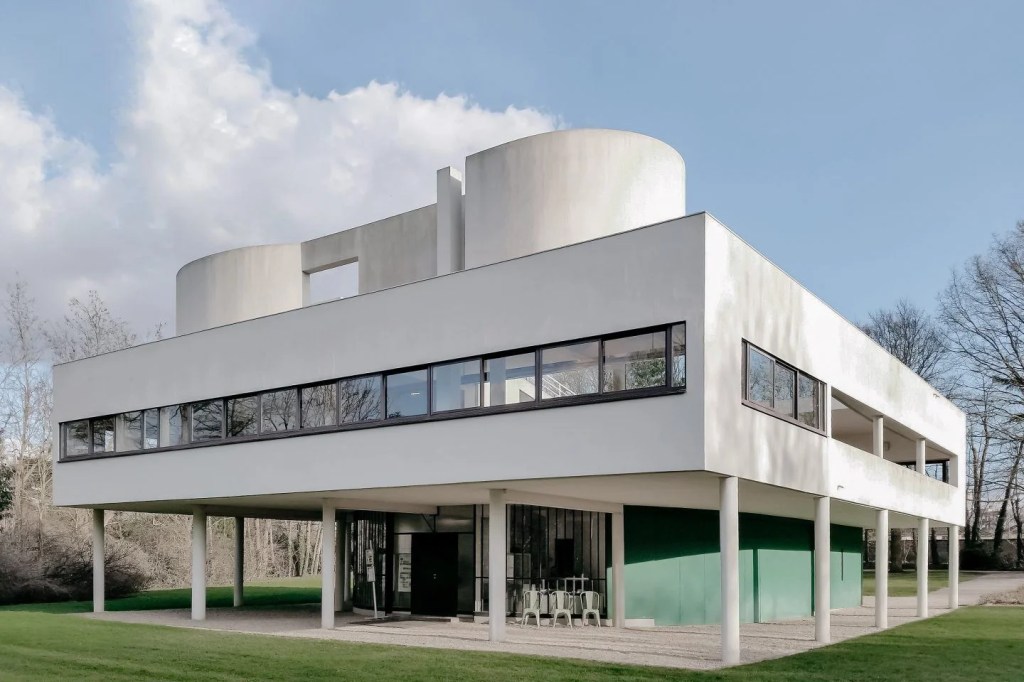
Three principal modernist architects’ plans – La Corbusier, Aaltos, and Dukier – comported with the treatment of tuberculosis, and symbolic approaches to treatment, health, and recovery. During the 19th and 20th Century, the rapid urbanization that led to greater population concentration in cloistered, unhygienic living spaces exacerbated the spread of tuberculosis. Prior to the development of the triple drug, public health messaging was centered around a Hippocratic relationship with the environment – and in particular, light and air. The progression of modernist architecture was not merely an aesthetic or commercial choice (as seen in parts of the world where Art Deco was deployed in the construction of cinema houses and other superficial structures), but that it was the direct consequence of a growing faith in the importance of exposure to the sun (heliotherapy), fresh air, and meditation. Architectural features such as chaise longues, large terraces, open balconies, solariums, and summer houses were part of an architectural philosophy of modernism that married design with spirituality, and construction with peace: quoting Le Corbusier, Campbell notes “that a house was not just a machine for living in but also ‘‘a convenient place for meditation’” (488). Thus, the treatment of tuberculosis was part of a broader re-integration of space and health, engineered by architects directly concerned with what a home could do for safety and recovery.
Somewhat tangentially, Campbell’s description of the popularization of this architectural style in the wake of disease and conflict reminded me of the emergence and cultural currency given at the moment to the “clean girl aesthetic.” This is a typology of social media that valorizes neat, classic fashion, ‘natural’ fresh faced makeup, and crucially, a love for interior design (for instance, the popularity of Architectural Digest videos echoes a love for design in an age of enforced quarantine, rising rent prices, and contagion). Campbell notes that the style of architecture seen “philosophically embodied the clean, white world that was so craved” and this bears a striking resemblance to the aesthetic disposition of the “clean girl” movement. For instance, where the 2010s focused on minimalism, high-tech laminate homes, contemporary architecture tends to favour massive French windows with streaming light, wooden floors, restorative plants, and open floor plans. Following the Covid-19 pandemic, it is clear that general cultural anxieties about cleanliness and safety have impacted stylistic choices in fashion and architecture.
 sanjana sheth
Leave a comment