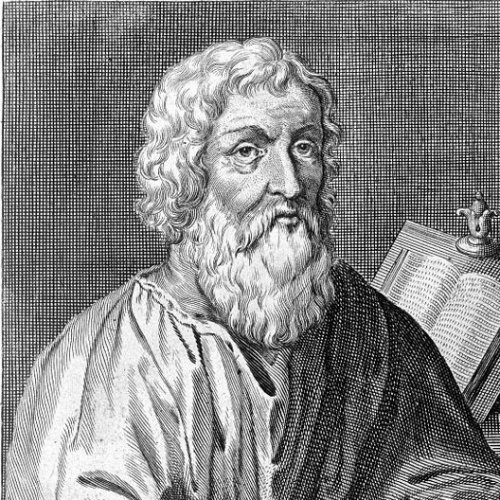
At around 400 BC, Hippocrates set forth the idea that health was a game of balance and imbalance between a person and the environmental landscape around them. He theorised that there were four humours, largely based on appearance and disposition, that were related with health, vulnerability to specific kinds of diseases, and prescribed treatment. Environmental miasmas, as they were called, were also taken seriously as causes for sickness, and so changing one’s relationship with physical space and the environment (lifestyle, physically moving etc) was considered the most effective strategy in combatting illness. Disease was situational and topographical. However, the major rupture was the invention/discovery of microbes. This created an aetiology for disease, a theory based on contagion rather than environment; this was the birth of the ‘placelessness’ of medicine. Contagion theory showed that the causes for diseases were universal – it was not based on whether you were living in one neighbourhood or one country or the other, microbes had universal effects on the human body. Medicine no longer considered the local fabric or context within which illness appeared, there was a boilerplate template to address and understand sickness. This was an individualistic, anatomised form of medicine, whereas miasma theories had contemplated communities, space, and our relationship with the natural world as crucial to wellness.
John Snow’s critical work on cholera in London pioneered epidemiology as we know it today (1854). The South London Experiment had a rigorous methodology which, by spatially mapping water and the incidence of cholera, was able to make a causal link between water consumption and infection. Snow managed to isolate the variable of water supply through his spatial mapping and field work to pinpoint one water pump that was spreading illness.
Science today attempts to re-introduce notions of place and miasma into medicine and treatment. Politically, each position has significant consequences for people’s well-being and equality in terms of public safety. The contagion theory is susceptible to be a victim of scientific rationality by claiming absolute objectivity. It runs the risk of losing touch with the human and communitarian dimensions of public safety, and the human behaviour often at the heart of how epidemics change, evolve, and are eradicated. However, it is an important tool in preventing medical essentialism – this is to say that it is no longer acceptable to argue that certain races, or dispositions of people are more likely to contract something just by virtue of their ascribed traits. Yet, sometimes the one-size-fits-all approach to medicine falls short precisely because health is not universal, but contextual and local. Colonisers have blamed the place for diseases that did not harm locals but only foreigners with different biological conditions.
Modern medicine appears to have to been structured for the average white man, and cannot be seamlessly transposed onto everyone else. On the other hand, the miasmatic theory succeeds inasmuch as it takes seriously considerations of place, situation, nature and community. However, it could slip into essentialism. In Haiti’s instance, contagion theory accurately traces the cause of the outbreak and is able to generate a sense of accountability for the human behaviour that allowed for the spread of the disease. Environmental approaches, however, such as the one put forth by Clolwell, default to an idea of nature and water being unpredictable, uncontrollable, and the direct cause of so-called ‘natural disasters’ that must be encountered in depoliticised terms. Therefore, it is imperative to look at epidemics from a holistic lens: checking the science and understanding the culture, interrogating political involvement and questioning constructed narratives. The result will be a safer, more equal world.
 sanjana sheth
Leave a comment